Prediction markets are no longer just for experts. They are now a multi-billion-dollar industry used to forecast everything from elections to interest rates. As more people trade on these platforms, the legal rules are becoming much stricter.
Launching your own platform requires more than just good code because you need a strong legal plan to stay in business.
And, this guide is exactly going to do this, where we will break down how to navigate the complex world of global regulations so you can build a successful and lasting prediction market platform.
Define Your Prediction Market Platform’s Soul
The most important step in starting a prediction market is deciding exactly what it is in the eyes of the law. Regulators do not care what marketing label you put on your platform; they care about the underlying economic mechanics of your contracts.
From a regulatory point of view, prediction market contracts normally fall into two main legal classifications that are mentioned below:
Financial Derivatives and Swaps (Including Binary Options and Event Contracts)
When users trade contracts that pay out on the basis of the future events (like $1 if an outcome occurs or $0 if it does not) then financial regulators like the U.S. CFTC or European authorities treat these as binary options or event-based derivatives. Operating this model requires registration as a designated exchange, clearinghouse, or licensed financial intermediary.
Gambling and Wagering
If the platform keeps predictions as house backed bets, bookmaking, or games of chance, it falls under national or state gambling laws. When this path is introduced local gaming licenses, strict age verification, and data privacy compliance with region-specific gambling restrictions applies.
Consider that when you choose the wrong legal category at the start, then you are going to face one of the biggest risks, as it can lead to heavy fines or your prediction market software development carries the risk of being shut down.
Understanding the U.S. Regulatory Fortress with Respect to Prediction Market Platform
The United States is one of the most lucrative yet stringently monitored markets for prediction event trading. Operating legally in the U.S. requires navigating federal derivatives law alongside individual state enforcement.
Designated Contract Markets (DCM)
If a platform wants to let every trader in the US buy and sell event contracts, it cannot just launch freely due to some strict rules. These strict rules are the compliance from Commodity Futures Trading Commissions or CFTC both as a Designated Contract Market which allows trading as well as Derivatives Clear Organizations which handles clearing and settlement.
However, getting DCM approval consists of passing the CFTC’s strict public interest and anti-evasion standards (including CFTC Rule 40.11). Contracts tied to political elections, gaming, or unlawful activities face much more strict regulatory eyes and potential prohibition.
The “Sweepstakes” Model: Proceed with Caution
To bypass the lengthy CFTC DCM registration process, some platforms attempt to structure their markets using a “dual-currency” sweepstakes framework (similar to social casinos).
While sweepstakes structures may avoid federal CFTC oversight by eliminating direct monetary consideration, they remain highly vulnerable to state-level anti-gambling laws. State attorneys general and gaming commissions actively challenge and penalize sweepstakes prediction guide models that offer real-money prize redemptions.
Understanding the European Regulatory Fortress with Respect to the Prediction Market Platform
Europe presents a fragmented regulatory landscape for prediction markets, where financial market rules and state gambling monopolies often overlap.
MiFID II and National Gambling Frameworks
A common misconception among operators is that Europe’s Markets in Crypto-Assets (MiCA) regulation provides a single “passportable” license for prediction markets. While MiCA creates a unified framework across all 27 EU member states for issuing crypto tokens and operating crypto asset service providers (CASPs), it does not cover financial derivatives or event contracts.
Instead, prediction markets operating in the EU face two distinct regulatory paths:
Financial Derivatives Under MiFID II
If your platform offers event contracts or binary options using crypto or fiat, European regulators (guided by ESMA) classify them as financial derivatives under Markets in Financial Instruments Directive II (MiFID II). Due to investor protection rules, retail distribution of binary event contracts is heavily restricted or banned in many EU jurisdictions.
National Gaming & Gambling Laws
If contracts do not qualify as regulated financial instruments, individual EU member states regulate them as sports betting or games of chance. Unlike crypto licensing, gambling licenses do not pass across borders—meaning operators must secure separate licenses in every individual EU country where they operate.
Understanding the Global Regulatory Fortress with Respect to the Prediction Market Platform
Many founders choose to launch their prediction market platform in offshore jurisdictions. These regions often provide a faster and more affordable path to market compared to the strict federal routes in the U.S. or EU.
However, choosing the right one is not just about saving money; it determines which markets you can legally touch and what kind of banking you can secure.
Comparing Popular Offshore Hubs
When looking offshore, you generally choose between speed and reputation. Here is how the most common options compare:
| Jurisdiction | Best For | Typical Setup Time | Cost & Reputation |
| Anjouan | Speed & Lowest Cost | 2–3 Weeks | Emerging; fits early-stage startups
note: Fits early-stage gambling startups; highly restricted by fiat payment processors and crypto on-ramps for financial derivatives. |
| Curaçao | Middle-Tier Status | 4–6 Weeks | Widely recognized but banking can be cautious |
| Isle of Man | Tier-1 Banking Access | 6+ Months | High cost (often >$200k); very strong reputation |
The Banking Battle and Revenue Models for Prediction Markets
Securing a traditional bank account is one of the hardest parts of running a prediction market. Most banks are wary of any platform that resembles wagering or gambling.
This challenge leads many founders to ask, how does Polymarket make money while avoiding these banking hurdles?
The answer for many crypto-native platforms is settling trades in stablecoins like USDC on a public blockchain. By using digital assets, platforms can operate without being 100% dependent on a single traditional bank for daily settlements. In terms of actual profit, most platforms generate revenue through:
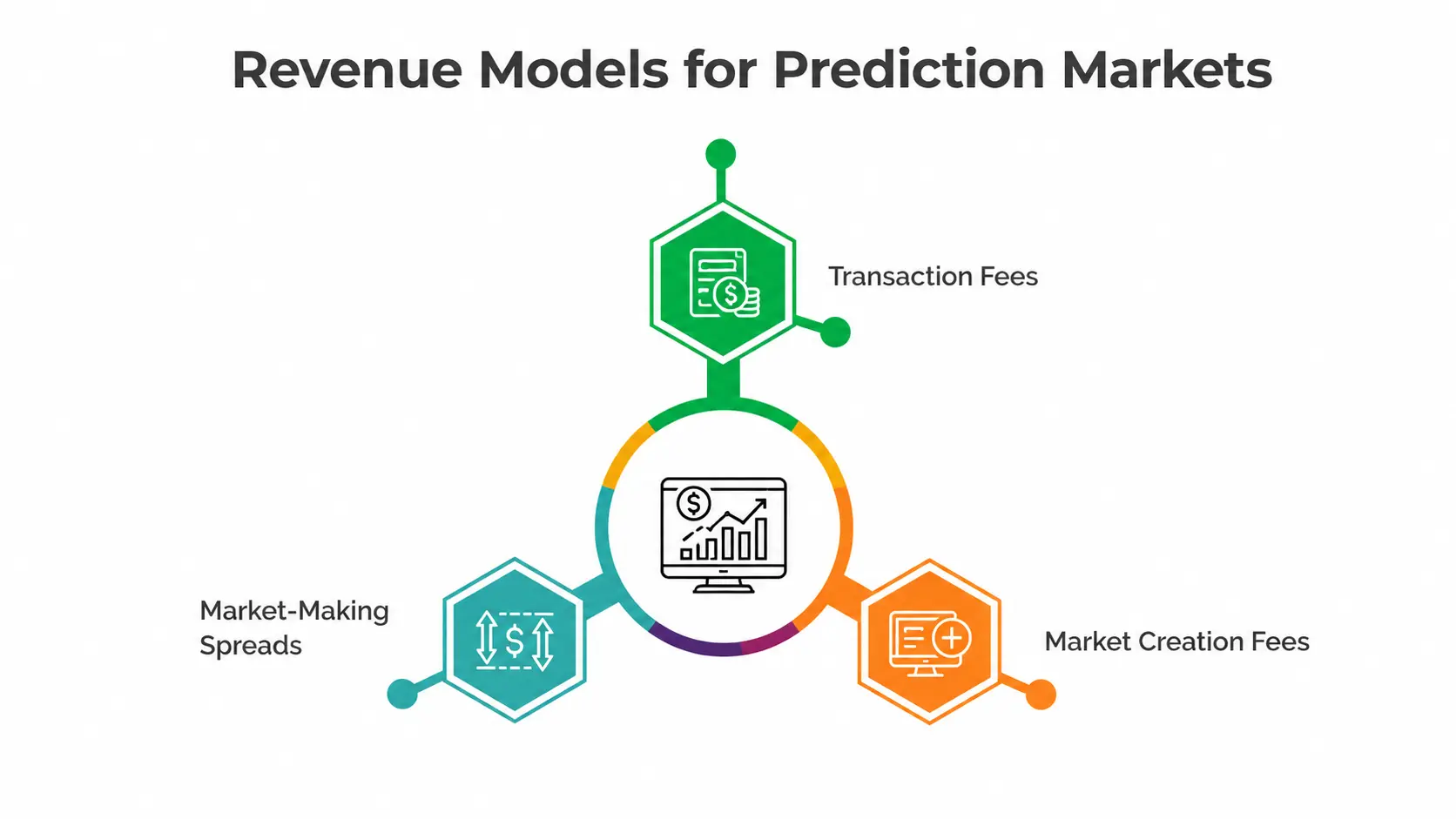
- Transaction Fees: Charging a small percentage (often 1% to 5%) on every trade executed.
- Market-Making Spreads: Earning from the “bid/ask” spread between buyers and sellers.
- Market Creation Fees: Charging users or institutions to list a new custom event.
While offshore licenses offer speed, they still require a credible compliance story to keep payment processors and crypto on-ramps from flagging your activity.
The Integrity Fortress of Mandatory Compliance Frameworks
Many founders think that because they use blockchain or smart contracts, they can let users stay anonymous. However, in 2026, the idea of an “anonymous financial market” is a myth that will quickly lead to federal investigations.
To build a legally compliant custom prediction platform, you must build compliance into your code from the very first day. Regulators care most about protecting the integrity of the market and making sure it isn’t used for illegal activities.
The Non-Negotiables: Your Compliance Checklist
Regardless of where you are licensed, almost every regulator will require you to have these four pillars in place:
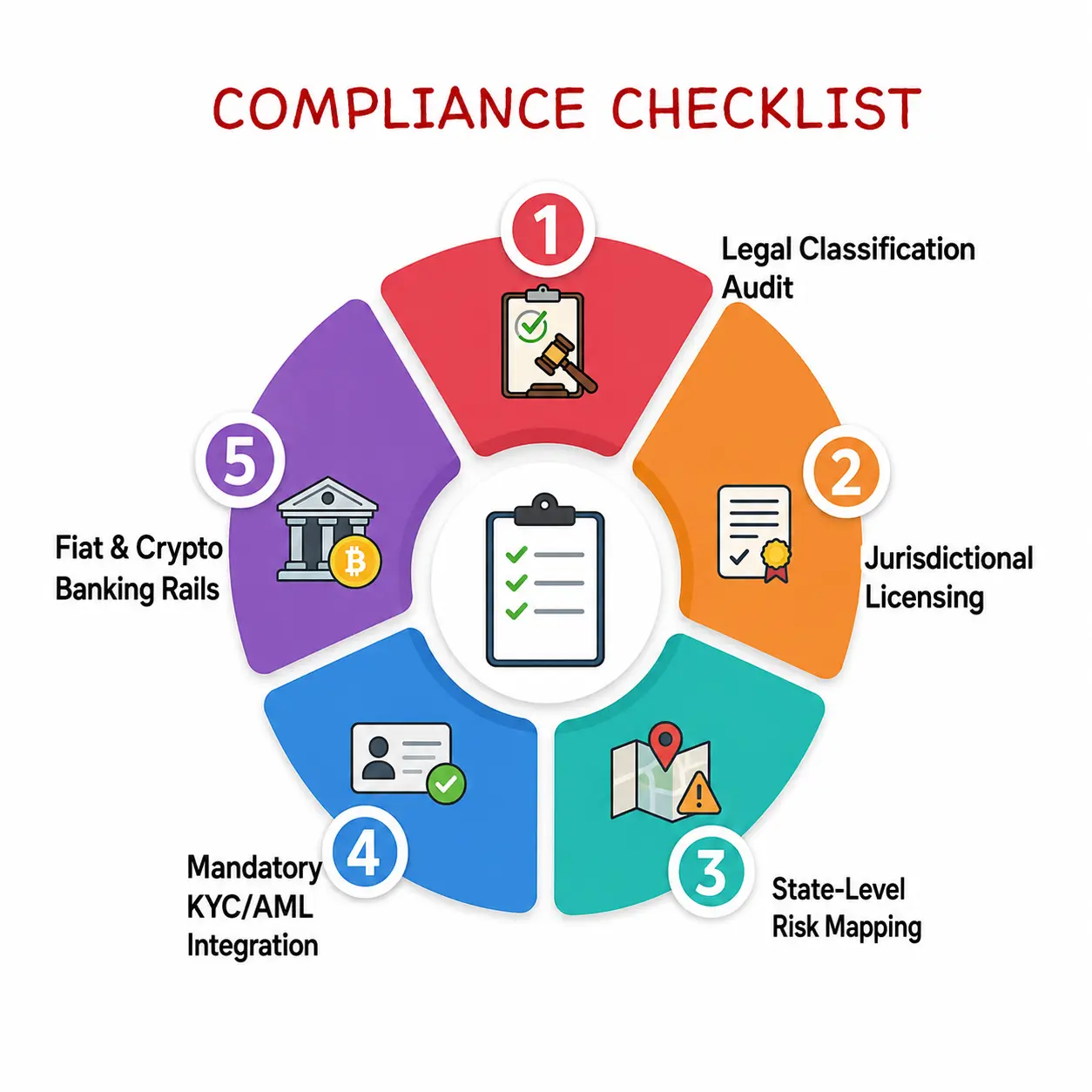
- Legal Classification Audit: Determine whether your contracts qualify as CFTC/MiFID II financial derivatives or local gambling products before writing code.
- Jurisdictional Licensing:
- U.S.: Secure a CFTC DCM/DCO registration or limit services strictly to non-U.S. residents via geofencing.
- EU: Evaluate MiFID II derivative compliance versus individual country-by-country gaming licenses (do not rely on a standard MiCA CASP license for derivatives).
- State-Level Risk Mapping: Perform a state-by-state analysis if utilizing sweepstakes or promotional model alternatives in the United States.
- Mandatory KYC/AML Integration: This is 2026, and no platform can skip compliance because every deposit and withdrawal goes through automated checks. It directly means that KYC for identity verification, sanction screening to block restricted users and AML controls to prevent suspicious money flows stays more than active. All together these safeguards make sure that the financial activity stays secure and transparent.
- Fiat & Crypto Banking Rails: Partner with crypto-friendly banks or regulated liquidity providers that explicitly permit derivative or prediction transactions.
By treating these rules as core features rather than a burden, you prove to banks and payment processors that your platform is a professional business, not a digital casino.
Prefer Reading: White Label Prediction Market Software | FanzoPlay
NetSet Software- Your Technical Partner for Prediction Market Platform Success
Building a successful platform requires a development partner who understands both high-performance code and global rules. NetSet Software is an expert in prediction market platform development, building technical foundations that satisfy strict compliance standards from day one. We provide the secure software infrastructure needed to satisfy all legal requirements, allowing you to launch your vision with complete confidence.
FAQ
Are prediction market platforms legal in the U.S. in 2026?
In 2026, prediction market platforms can work legally in the US, but only if they are registered with the Commodity Futures Trading Commission or CFTC as Designated Contract Markets under federal derivatives law. Even then too there are state regulators that continue to pose further challenges which a business further has to satisfy.
Do I need a gambling license or a financial license?
It depends on what your users are trading but contracts that track economic data or financial results generally require a financial derivative license but markets with sports, elections, or pop culture most of the time fall under gaming and gambling regulations.
Can I run a platform anonymously without KYC?
At this time, KYC and AML checks are not optional but they are required in nearly every regulated market. Any platform that tries to operate anonymously faces heavy federal scrutiny and struggles to access basic banking or crypto settlement rails which makes compliance the only realistic path forward.
What is a Designated Contract Market (DCM)?
A DCM is a CFTC-regulated derivatives exchange, considered the “gold standard” for U.S. operations. Obtaining this federal status allows a platform to offer event contracts nationwide by preempting state-level gambling bans.
How much will it take for my platform to complete the licensing process?
The time it takes to get licensed depends on where you are going to apply. Offshore options like Anjouan completes in like 2 to 3 weeks while Curacao usually takes 4 to 6 weeks. And, in comparison, US DCM registration is far more demanding which often stretches 12 to 24 months or longer due to intensive regulatory review.