Berlin has emerged as one of Europe’s fastest-growing technology hubs, but growth brings operational pressure. SaaS platforms, fintech systems, logistics applications, and digital marketplaces now run in environments where even small inefficiencies can reduce revenue and impact user retention.
Many teams still struggle with slow deployments, unstable releases, and rising cloud costs. Features take longer to reach production. Systems fail under real traffic conditions. Infrastructure expenses increase without clear control. These issues directly affect business performance, not just engineering output.
Engineering success is no longer defined by how much is built. It depends on how reliably systems run, how quickly updates are delivered, and how efficiently infrastructure is managed at scale. Gaps in these areas create measurable business risk.
This is why DevOps has become a core function. Companies investing in DevOps engineer services in Germany are building systems that support continuous delivery, controlled scaling, and predictable uptime.
Without structured DevOps practices, organizations face recurring delays, system instability, and escalating operational costs as they grow.
Operational Challenges Driving DevOps Adoption in Berlin
Before adopting DevOps, most organizations face repeated execution issues that limit growth and increase system risk.
Common operational challenges:
- Deployment cycles extend to 48–72 hours due to manual processes.
- Production incidents during traffic spikes.
- Inconsistent environments between development and production.
- Lack of centralized monitoring and alerting systems.
- Cloud infrastructure costs are increasing without visibility or control.
These problems do not originate from engineering capability gaps. They stem from the absence of structured infrastructure and automated deployment systems.
Business impact:
- Slower release cycles reduce the ability to respond to market changes.
- System downtime affects revenue and user experience.
- Engineering teams spend time fixing infrastructure instead of building product features.
- Cloud expenses grow without measurable efficiency.
At this stage, companies begin to hire DevOps developers in Germany or engage consulting firms to stabilize their infrastructure and deployment processes.
DevOps as an Execution Framework for Modern Engineering Teams
DevOps implements a structured framework that integrates development, operations, and infrastructure management into an integrated system.
Instead of relying on manual coordination, DevOps engineers implement automation across deployment pipelines, infrastructure provisioning, and monitoring systems.
Core improvements introduced by DevOps:
- Continuous Integration and Continuous Delivery (CI/CD) pipelines.
- Infrastructure as Code (IaC) for environment consistency.
- Containerization for standardized application deployment.
- Automated scaling based on real-time demand.
- Monitoring systems for performance visibility.
Operational outcome:
- Deployment cycles reduced from days to hours.
- Stable releases with minimal downtime.
- Controlled infrastructure usage aligned with demand.
- Faster recovery from production incidents.
This structured approach is typically implemented through Cloud DevOps consulting services, which allow companies to deploy production-ready systems without long hiring cycles.
Market Demand for DevOps Engineers in Germany (Data-Driven Analysis)
The demand for DevOps engineers across Germany continues to increase as companies transition toward cloud-based infrastructure and automated deployment models.
- According to the Ifo Institute report, 46.5% of companies in Germany are already using cloud computing.
- Based on data from the Federal Statistical Office of Germany (reported by Welt), 54% of companies use paid cloud services, rising to 86% among large enterprises.
- An industry report by B2B Cyber Security indicates that up to 90% of companies in Germany are already using cloud applications or planning adoption.
Berlin-specific hiring indicators:
Berlin is one of Germany’s leading tech hubs, with a high concentration of DevOps and cloud engineering roles. DevOps engineers in Berlin earn between €66,500 and €96,250 annually, with a median salary of €74,250. Due to strong demand and limited talent availability, hiring experienced DevOps engineers often involves extended recruitment cycles.
These data points confirm a supply-demand imbalance, encouraging companies to rely on DevOps engineer services in Berlin through consulting and outsourcing models.
Berlin’s Tech Ecosystem and Infrastructure Requirements
Berlin-based companies operate in high-demand production environments where infrastructure performance directly impacts business outcomes.
Key operational requirements:
- Frequent and reliable deployment cycles.
- High system availability (typically above 99.9%).
- Infrastructure that scales automatically with traffic.
- Real-time monitoring and incident detection.
Without structured DevOps systems, maintaining these requirements becomes difficult as application complexity increases.
Organizations working with a DevOps Consulting Company in Berlin ensure their infrastructure supports growth without introducing instability.
Core Responsibilities of DevOps Engineers in Production Environments
DevOps engineers manage infrastructure and deployment systems from integration to production.
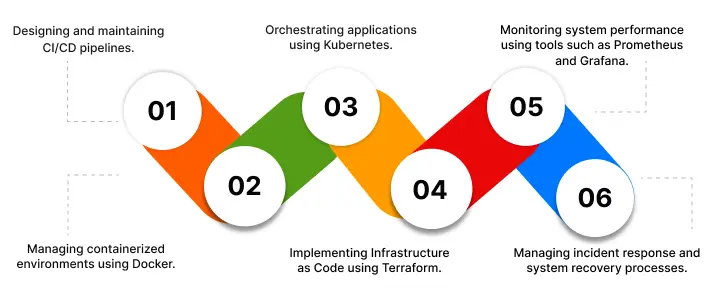
Key responsibilities include:
- Designing and maintaining CI/CD pipelines.
- Managing containerized environments using Docker.
- Orchestrating applications using Kubernetes.
- Implementing Infrastructure as Code using Terraform.
- Monitoring system performance using tools such as Prometheus and Grafana.
- Managing incident response and system recovery processes.
These responsibilities ensure that systems remain scalable, reliable, and efficient under production conditions.
DevOps Consulting vs In-House Hiring in Germany
| Factor | DevOps Consulting | In-House Hiring |
| Hiring Time | 1–2 weeks | 2–3 months |
| Cost Structure | Flexible | Fixed salary |
| Expertise Level | Multi-industry experience | Limited to internal exposure |
| Scalability | Immediate | Gradual |
| Execution Speed | High | Moderate |
Companies often use consulting services to hire DevOps developers in Germany faster and access broader technical expertise.
DevOps Architecture Implemented by Berlin Companies
Modern DevOps environments follow a layered architecture model designed for scalability and automation.
Standard architecture components:
- CI/CD pipelines using GitLab CI or Jenkins.
- Containerization using Docker.
- Container orchestration using Kubernetes.
- Cloud infrastructure hosted on AWS, Azure, or Google Cloud.
- Monitoring and alerting using Prometheus and Grafana.
This architecture ensures consistent deployment, scalable infrastructure, and full system visibility.
Structured DevOps Implementation Process
A typical DevOps implementation follows a defined execution framework.
Implementation stages:
- Infrastructure audit and system analysis.
- CI/CD pipeline design and deployment.
- Containerization of applications.
- Infrastructure as Code implementation.
- Monitoring and alerting system setup.
- Continuous optimization based on performance metrics.
This structured process defines enterprise-level DevOps engineer services in Germany.
Cost Structure of DevOps Engineers and Consulting Services
| Service Type | Cost Range |
| Full-time DevOps Engineer | €75,000 – €110,000/year |
| Freelance DevOps Engineer | €60 – €120/hour |
| DevOps Consulting Projects | €5,000 – €25,000 |
Consulting services often reduce long-term infrastructure inefficiencies and improve execution timelines.
Measurable Business Impact of DevOps Implementation
Organizations that implement DevOps practices report measurable performance improvements.
Typical outcomes:
- Deployment frequency increased by 3-5 times.
- System downtime reduced by 40%-60%.
- Cloud infrastructure costs reduced by 20%-30%.
These improvements directly contribute to operational efficiency, system reliability, and cost optimization.
Cloud Cost Optimization Through DevOps Practices
DevOps engineers implement structured strategies to control cloud expenses.
Key optimization methods:
- Auto-scaling infrastructure based on usage.
- Identifying and removing unused resources.
- Optimizing container workloads.
- Monitoring usage patterns continuously.
These practices ensure efficient use of cloud resources and predictable cost structures.
NetSet Software Solutions: DevOps Execution Partner for Germany
NetSet Software Solutions delivers structured DevOps implementation for high-growth organizations.
Capabilities:
- 120+ DevOps and cloud infrastructure projects delivered.
- Experience across SaaS, fintech, and enterprise systems.
- Certified engineers in Kubernetes and cloud platforms.
Business outcomes:
- Deployment cycles reduced by up to 60%.
- Infrastructure cost savings between 20% and 30%.
- Improved system uptime and scalability.
Solving DevOps Bottlenecks in Your Organization
Organizations facing:
- Delayed deployment cycles.
- Infrastructure inefficiencies.
- Scaling limitations.
- Production instability.
can address these challenges through expert-led DevOps engineer services in Germany.
Prefer Reading: How to Hire the Right AWS Cloud DevOps Engineer in Germany
Future of DevOps in Berlin (2026–2028)
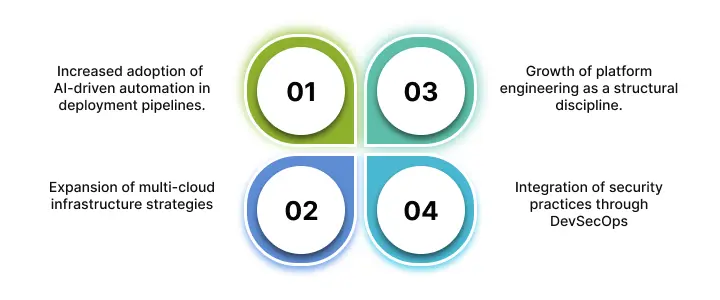
- Increased adoption of AI-driven automation in deployment pipelines.
- Growth of platform engineering as a structured discipline.
- Expansion of multi-cloud infrastructure strategies.
- Integration of security practices through DevSecOps.
These trends indicate continued demand for DevOps expertise across Berlin’s technology ecosystem.
Conclusion
The demand for DevOps engineers in Berlin is driven by the need for scalable infrastructure, efficient deployment systems, and reliable production environments. As digital systems grow in complexity, organizations require structured DevOps frameworks to maintain performance and control operational costs.
Companies that invest in DevOps gain measurable improvements in deployment speed, system stability, and infrastructure efficiency. Those that delay adoption face increasing operational challenges as their systems scale.
If deployments are slowing, systems are unstable, or cloud costs are rising without control, the gap is in DevOps execution. NetSet Software Solutions delivers production-grade CI/CD pipelines, stable infrastructure, and cost-optimized scaling.
If you plan to hire DevOps developers in Germany, choose a partner that improves release velocity, ensures system stability, and enforces infrastructure efficiency from day one.

FAQs
Why are DevOps engineers in high demand in Berlin?
DevOps engineers manage automated deployments, scalable infrastructure, and system reliability, enabling companies to maintain uptime, reduce operational risks, and support continuous delivery across Berlin’s fast-growing technology ecosystem.
What is the cost of DevOps consulting in Germany?
DevOps consulting costs range from €5,000 to €25,000, depending on infrastructure complexity, implementation scope, and project requirements across deployment pipelines, monitoring systems, and cloud environments used by organizations.
How do DevOps engineers improve deployment efficiency?
They implement CI/CD pipelines, automate infrastructure processes, standardize environments, and deploy monitoring systems, ensuring faster, consistent, and reliable deployments across production systems with minimal operational disruption.
Why do companies prefer DevOps consulting services?
Companies prefer consulting services from companies like NetSet Software Solutions to avoid hiring delays, access experienced engineers, and implement infrastructure quickly, improving deployment speed and system performance without long recruitment cycles.
What tools are commonly used in DevOps implementation?
DevOps engineers use Kubernetes, Docker, Terraform, Jenkins, and Prometheus to manage deployments, automate infrastructure, and monitor system performance across cloud-based production environments effectively.