We have crossed the halfway point of this year, and the sports world is clearly seeing a shift from spectacle to systems where data-driven insights have officially replaced intuition. The industry is no longer just about the roar of the crowd but has transformed into a financial frontier built on infrastructure, participation, and real-time attention.
Now as the boundaries between media, betting, and live performance continue to blur, organizations are moving to a future that rewards those who solve real-world problems using technological accuracy.
But, to solve the problems in sports prediction, you need to understand what all trends will dominate the sports prediction market. That is what we are going to bring to you in this blog post.
Prefer Reading : Fanatics Markets Explained: How Sports Prediction Markets Are Transforming Event Trading
Trend 1: AI as the engine of predictive accuracy
AI has officially outgrown its role to become a foundational connective engine of the sports industry. In 2026, AI is being used to break down data silos and transform how organizations work from the inside out.
For businesses that want to lead the market, mastering sports predictions is no longer about luck; it is about making use of an intelligence layer that makes every commercial and operational decision stronger.
AI as a core infrastructure
The integration of AI is actually becoming a necessity because businesses are using it as their core operating system in place of mere tools.
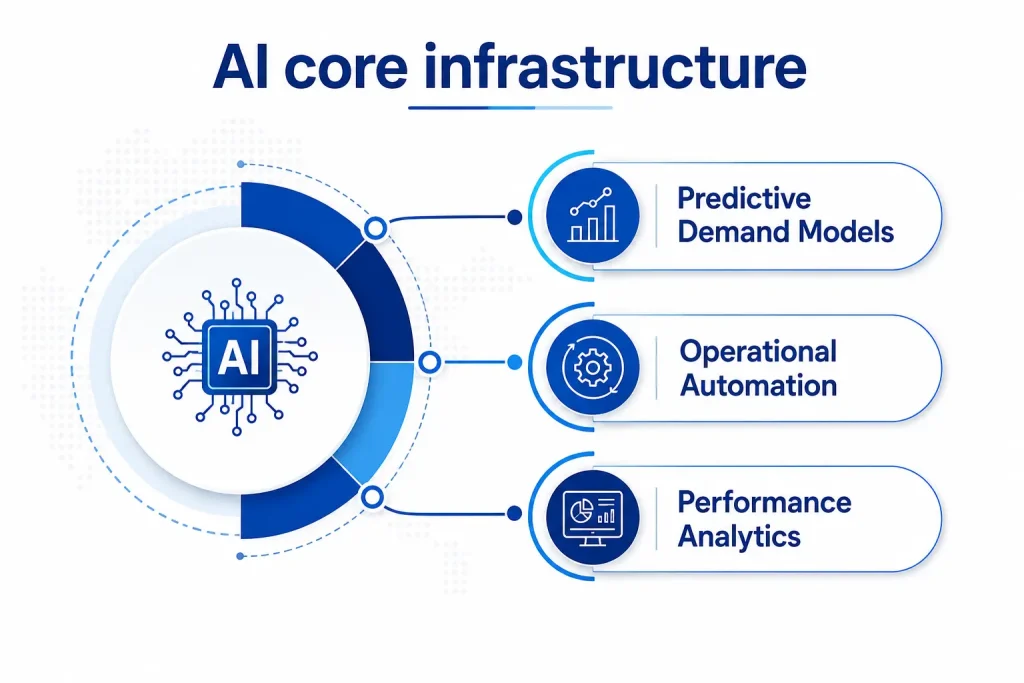
- Predictive Demand Models: These models now feed real-time dynamic pricing decisions to make sure that revenue is maximized on the basis of instant market shifts.
- Operational Automation: Smart AI agents are not running the complete workflows whether you talk about season ticket renewals or the optimization of stadium staff schedules, infact even forecasting of the crowd flow.
- Performance Analytics: Modern platforms are bringing biomechanics, health data and real time insights into one system to achieve accurate industry risk predictions and faster recovery optimization for athletes.
The rise of hyper-customization
For the fan, AI moved the experience away from generic broadcasts to the watch and bet interactions and custom content. If you look at most of the leading betting applications, they are engineered for maximum speed and convenience.
- Adaptive interfaces: Mobile home screens now automatically adapt to a user’s preferences, prominently displaying their favorite teams and specific bet types.
- Quick Bet Builders: Fans can now prepare roosters and teams in just a few taps with the help of AI-driven recommendations suiting their betting history.
- Real-time engagement: At the time of live broadcasts, AI-generated highlight reels and instant fan questions keep users deeply connected in the ecosystem.
This shift toward an agentic workforce allows sports businesses to do more with fewer resources so that AI can handle the heavy lifting of data cleaning and repetitive tasks while human teams focus on high-level strategy.
Trend 2: The financialization of prediction markets
With this year, prediction markets are also seeing the shift from niche experimental products into legitimate financial infrastructure. This shift is labelled by a move away from the traditional sportsbook menu toward markets that are more communal and culturally relevant financial systems that reward accuracy and market insight.
Liquidity as the ultimate moat
The constant rise of prediction markets has been driven by massive liquidity surges.
Major platforms like Kalshi and Polymarket have achieved levels of liquidity and regulatory compatibility that were previously unseen, where some volumes even reached billions of dollars. In this environment, liquidity compounds the deepest pools of capital attract the sharpest traders and a greater volume of mainstream users.
For new entrants, the barrier to entry is high because building a market with hundreds of thousands of daily trades requires capital that cannot be easily matched by smaller challengers.
At the same time, many operators are turning to high-quality white label prediction market software to quickly deploy robust, liquid-ready platforms that can compete with big giants.
More than betting (a new asset class)
Investors now see prediction markets not just as gambling venues but as scalable data layers and infrastructure. The long-term value lies in:
- Infrastructure and clearing: The underlying systems that handle huge trade volumes with financial-grade accuracy.
- Institutional Scalability: Markets that can scale systems more than to a single league or season, giving year-round engagement.
- Cultural Relevance: Platforms that respond quickly to trends in politics, entertainment, and social narratives in place of just match scores.
- With the treatment of these markets as a financial system, this year marks the year when predicting the future became a serious economic engine.
Trend 3: The Conversational and Mobile-First UX
The user experience this year has quite changed from manual navigation as now fans expect a zero-click environment where technology understands their needs and shows just that to them. Nearly every betting app is now engineered for maximum speed, convenience, and hands-free interaction.
No more manual navigation
The days of digging through deep menus to find a specific market are over. Conversational AI has turned multi-step betting journeys into single-sentence commands.
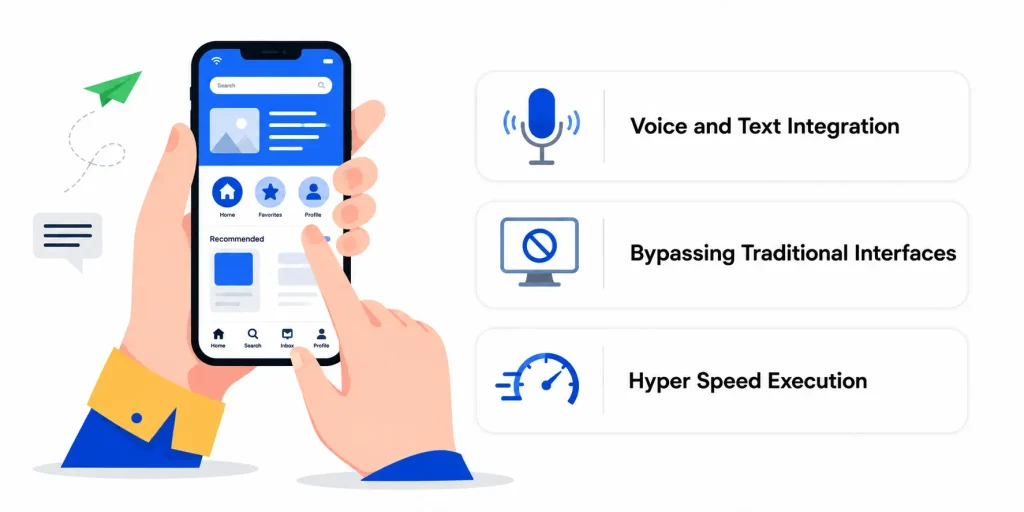
- Voice and Text Integration: Users can now habitually ask their devices to place a bet or find a specific player prop much like they ask for music or weather updates.
- Bypassing Traditional Interfaces: AI chat platforms are becoming the new commerce interface so that fans can complete transactions from buying tickets to placing wagers without ever visiting a traditional website.
- Hyper Speed Execution: User retention in this fast-paced market depends on having the best trading prediction software that supports near-instant execution and low-latency data updates.
Frictionless onboarding and customization
Mobile-first betting apps now focus on speed to make sure that every additional second of load time does not impact conversion rates.
- Biometric Security: Face ID and fingerprint authentication have replaced cumbersome password entries.
- One tap funding: Integration with Apple Pay, Google Pay, and other mobile wallets enables instant account funding.
- Tailored Layouts: Home screens are no longer static; they adapt in real time to display favorite teams and preferred bet types on the basis of the user’s historical data.
This trend represents a fundamental rethinking of how betting experiences are delivered that moves toward a future where the interface is invisible and the interaction is purely conversational.
Trend 4: Community, social betting, and global growth
The betting experience is not a solitary transaction anymore as it has become a full social and communal activity. This shift brings a new generation of fans who value participation and belonging as much as the outcome of the game itself.
Businesses are no longer just into offering markets but have to build ecosystems where fans can influence, share, and compete together in real time.
The viral loop of social betting
One of the most notable innovations this year is for sure the wide adoption of bet-sharing features:
- One-click copying: Fans can instantly share their betting slip with friends or followers to which others can copy the whole slip in a single click.
- Organic Marketing: This builds a powerful viral sharing mechanism that makes every normal user into a potential brand ambassador.
- Interactive Broadcasts: At the time of live events, viewers take part in real-time polls and predict next actions to turn passive consumption into active engagement.
Africa’s Mobile-First Betting Boom
While developed markets are maturing, Africa is entering a period of amazing growth on mobile first betting where annual growth around 5 to 6% through the rest of the decade. It is not like western models that mostly focus on lightweight, fast, and resilient UX that functions in low-bandwidth environments.
Global operators looking to capture this momentum are mostly making use of flexible prediction market software solutions to adapt to these unique regional regulations and community-driven dynamics.
| Metric | Before and in 2024 (Passive engagement) | After 2026 (Interactive engagement) |
| Primary Interface | Manual menu navigation | Voice, text, and AI chat |
| Social Connection | Isolated betting | “Bet Sharing” and viral loops |
| Market Depth | Match results/scores | Granular player actions |
| Broadcast Style | One-way streaming | Interactive overlays |
Trend 5: Niche markets and participatory sports
The final trend defining this year and further is the expansion of prediction markets into hypergranular actions and grassroots sports. As technology gives deeper visibility into player performance, the micro market has come out as the new frontier for high-frequency engagement.
The accuracy of micro betting
Advancements in AI and low-latency data tracking have enabled a move toward even more granular markets. Fans are no longer just betting on who wins the set; they are predicting individual player actions with second-level accuracy.
- Second Level Accuracy: AI algorithms can now study thousands of factors in real time to adjust odds for given player movements or immediate game events.
- Democratization of Data: Profession grade tracking that was once reserved for elite athletes is now being applied to amateur and recreational levels to create new data layers for prediction.
From Grassroots to Asset Class
Participatory sports are no longer just weekend hobbies as they have become mainstream where games like pickleball and other racquet sports are taking the form of institutional relevance. The surge is dramatic and in the UK alone, Padel participation has crossed more than 2500% since 2019 which shows how fast these sports are reshaping the recreational picture.
As these niche markets grow, the modern fan expects their prediction betting app to offer comprehensive coverage of these emerging sports alongside major league scores. Success in this area depends on integrating community-driven network effects with strong software infrastructure that can handle the high frequency of micro-interactions.
Partner with NetSet for the Future Sports Revolution
At NetSet, we are the expert architects behind the next generation of Sports Predictions technology. As leading platform developers, we provide the robust, scalable infrastructure needed to turn these 2026 trends into your operational reality.
From deploying high-liquidity white label prediction market software to engineering the best trading prediction software for instant micro-market execution, our prediction market software solutions are built for global scale.
Partner with us to build a prediction betting app that defines the new financial frontier of sports technology.
FAQs
How is AI changing the accuracy of sports predictions in 2026?
AI is no longer on the experimental stage and has become the backbone of sports tech with predictive demand models and real time behaviour clustering for unmatched accuracy.
What is the mobile first approach when it comes to sports prediction platforms?
A mobile-first approach focuses on complete optimization for speed and convenience. It makes use of biometric logins, one-tap deposits, and conversational AI interfaces to eliminate friction from the entire user journey.
Why are prediction markets being treated like financial systems?
Major platforms have achieved massive liquidity and regulatory compatibility. This has turned prediction markets into legitimate financial infrastructure and data layers for social and economic trends rather than just simple betting venues.
What is the Watch-and-Bet trend going in the sports prediction market?
Live broadcasts now feature real-time data overlays and interactive prompts so that fans can place wagers directly within the streaming interface and not move to other third party platforms.
How does social betting impact organic growth?
Features like Bet Sharing turn every fan into a growth engine where with one‑click slip copying, users go viral that changes their ordinary engagement into a powerful community‑driven loop.