Tokenization Platform Development- Architecture, Features, Costs and Technology Stack

Since the world is making a fundamental switch to modern finance, more and more real-world assets are being tokenized. Modern fin tech has given the infrastructure to convert illiquid physical assets into tradable digital tokens running on blockchain and verified by smart contract.
As per Boston Consulting Group and ADDX Report, global tokenization of real world assets is set to reach $16.1 trillion by 2030 which roughly will be 10% of the global GDP.
Yet, the truth is that to launch a successful platform, it requires much more than just using a basic smart contract. It requires a sync ecosystem that can connect legal frameworks, compliance protocols, safe digital custody, and seamless user interfaces.
But if you understand multi-layer architecture, key features, tech stack, and realistic costs for end-to-end asset tokenization platform development, you can build a successful platform that leads the market.
Understanding the Architecture of Tokenization Platforms
To build a production-grade tokenization platform, it comes with strong architectural engineering challenges. For every property spread into tokens, there is a multi-layer software stack that works under the hood to keep digital ownership records in sync with real-world legal titles.
| Layer 1: User application layer that consists of investor portals, admin dashboards, and analytics |
| Layer 2: Backend and API Gateway Layer that contains microservices, offchain DBs, REST APIs, rate limiting |
| Layer 3: All of the Compliance functionalities like KYC/AML verification, whitelisting, accreditation |
| Layer 4: This layer is very complex because it consists of smart contract and token logic layer like ERC 3543, ERC 1400, Transfer Rules, Minting/Burning |
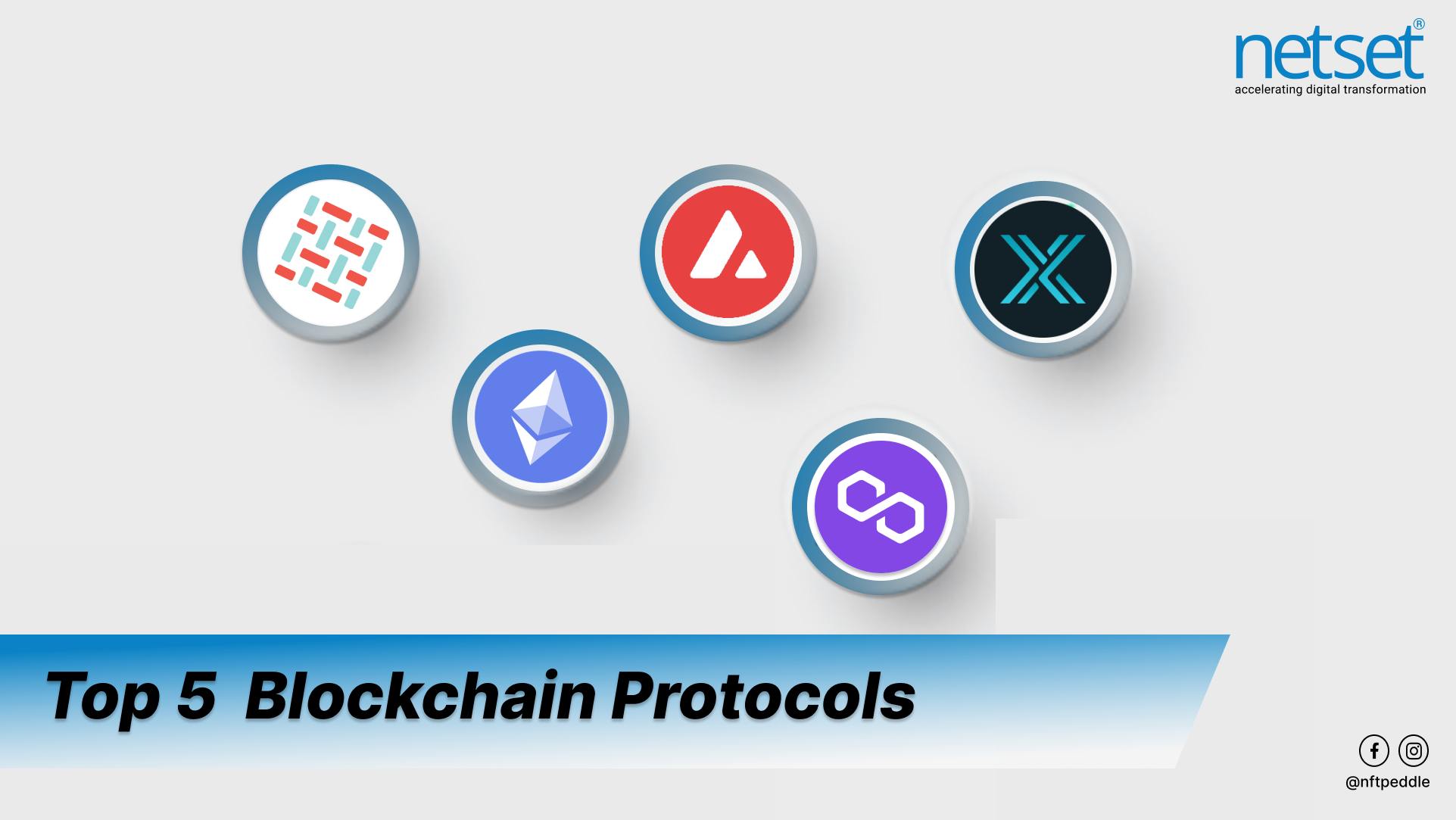
| Layer 5: In this layer we have blockchain and settlement elements running on technologies like Ethereum, Polygon, Avalanche, Hyperledger Fabric |
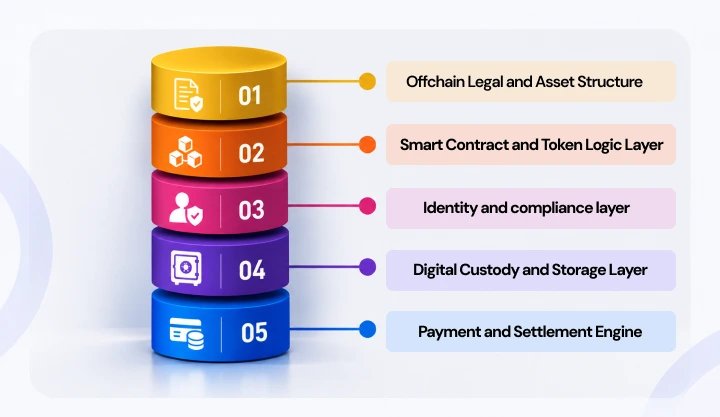
Layer 1: Offchain Legal and Asset Structure
A digital token cannot apply ownership on its own, which is why the foundation layer consists of physical or corporate legal entities like special purpose vehicles (SPVs) or holding companies that hold the property deed or asset titles.
Working agreements give investor rights, dividend distribution logic, and exit procedures. The platform’s job is to make sure that the on-chain ledger reflects the legally applicable ownership structure.
Layer 2: Smart Contract and Token Logic Layer
This layer changes financial rules into self-executing code where tokenization platforms make use of permissioned security token standards to apply regulatory compliance straight inside the contract.
- ERC 3643 (T-REX): A compliance-native standard featuring an on-chain identity registry that verifies investor eligibility prior to every transfer.
- ERC 1400: A module security token standard that supports partitioned token balances, document URI linking, and forced redemptions.
- ERC 20 and ERC 721: Standard protocols used for basic fungible property shares or non-fungible property deed representations.
Layer 3: Identity and compliance layer
You cannot ignore the regulatory compliance for real-world asset tokenization which is why this layer connects identity verification providers to validate Know Your Customer, Anti-Money Laundering, and accredited investor status. All the verified wallet addresses are added to an on-chain registry, blocking noncompliant transfers on its own.
Layer 4: Digital Custody and Storage Layer
All the institution level digital assets ask bank level security which is why custody layers apply MPC wallets, cold key storage and role basis multi-signature controls. This helps in keeping the private keys much safer and prevents any unauthorized transactions.
Layer 5: Payment and Settlement Engine
While ownership resides on-chain, cash flows often start in fiat currency. The payment engine collects rental income or dividends, processes expense netting, converts funds into stablecoins like USDC or USDT, and distributes payouts in proportion to token holders using cap table snapshots.
The core features for issuers and investors in tokenization platforms
A successful tokenization platform balances administrative control with a clean, accessible interface for global investors.
Features for investors
- Automated investor onboarding: Without much effort, the investor must be able to perform KYC/AML verification flows that let individual and institutional investors submit documents, verify residency, and pass suitability checks.
- Portfolio and Yield Dashboard: There must be real-time performance tracking that shows active property holdings, upcoming rental distributions, tax statements, and transaction histories.
- Flexible Wallet Connectivity: Must support direct Web3 wallet connections that are MetaMask and WalletConnect, along with managed custodial wallets so that non-technical users can operate easily.
Prefer Reading: A Complete Guide To Web3 Embedded Wallets For Crypto Trading Platforms
Features for issuers and platform admins
- Asset minting and cap table management: Giving interactive controls so that users can define tokenomics, create lockup periods, mint tokens and keep an automated overall cap table.
- Due diligence document vault: There must be a repository that gives safe access to upload property appraisals, land titles, zoning permits, and insurance certifications, running on chain for best security verification.
- Automated Yield Distribution Engine: Must execute divided distribution rounds, handle multi-currency conversions, and manage tax withholding per jurisdiction.
- Secondary Market trading venue: There must be a connected order book or peer to peer bulletin board that lets token liquidity while keeping automatic whitelist checks on buyers.
The modern tech stack under the tokenization platforms
To choose a reliable technology stack, you have to make sure that it stays fast, is highly secure, and supports seamless integration with existing banking infrastructure.
Frontend layer
For the user side, teams mostly make use of frameworks like React.js, Next.js and TypeScript where styling is taken care by Tailwind CSS or Material UI to keep interface modern and responsive. For the Blockchain side, SDKs like Web3.js, Ethers.js and Wallet connect do make it possible to connect wallets and manage transactions smoothly.
Backend and API layer
Behind the scenes frameworks such as Node.js with NestJS or Express, Go or Java Sprint Boot power the server logic. For the communication handling between services, AWS API Gateway, Kong, and GraphQL or REST APIs are popular for secure data flow and efficiency.
Data and Storage Layer
- Relational DB: PostgreSQL (primary user and asset records)
- Caching: Redis (high-speed session and state caching)
- Offchain storage: IPFS (Decentralized Metadata) | AWS S3 (Encrypted Documents)
Blockchain and Smart Contract Layer
- Public L1/L2: This choice comes down to Ethereum, Polygon, Avalanche, and Solana depending on the requirements.
- Enterprise Chains: Most companies go for widely adopted networks like Hyperledger Fabric or Hyperledger Beau to run secure, enterprise grade solutions.
- Smart Contracts: Most of contracts are written Solidity or Rust since both are reliable when it comes to building decentralized applications.
- Oracles: There are Services like Chainlink that provide trusted data feeds from NAV value to asset prices so applications can connect with real world information.
Tokenization Platform Development Costs and Pricing Frameworks
The financial investment required for asset tokenization platform development varies on the basis of software customization, asset complexity, regulatory growth, and security requirements.
Strategic Deployment Approaches
For the most part, when it comes to building a digital solution, you have three main approaches mentioned below.
MVP Development Solutions
Startups validating market interest can launch MVP development solutions focused on primary issuance, basic KYC, simple wallet management, and admin dashboards. An MVP tests demand while controlling initial capital expenditure.
White Label Tokenization Platforms
Making use of a white label tokenization platform gives prebuilt audited smart contract libraries and preconfigured investor portals. This approach boosts time to market from months to weekends and lowers upfront costs by up to 60%.
Custom Enterprise Builds
Most of the large financial institutions and REITs mostly ask for custom builds from scratch. This option gives full intellectual property ownership, custom compliance frameworks, and some exceptional ERP/banking integrations.
Estimated Cost and Timeline Breakdown
| Deployment Tier / Component | Approx Cost Range in US dollars | Approx Timeframe | Ideal Use Case |
| Basic MVP Solution | From $20,000 to around $60,000 | 8 – 12 Weeks | Market validation & early pilots |
| White-Label Platform | From $35,000 to around $100,000 | 12 – 16 Weeks | Fast deployment with custom branding |
| Custom Enterprise Ecosystem | From $100,000 and may reach up to $300,000 or more. | 16 – 24+ Weeks | Institutional funds & multi-asset firms |
| Smart Contract & Audit Phase | From $7,000 to $25,000 | 3 – 5 Weeks | Contract development & third-party audits |
| Compliance & KYC Module | From $15,000 to around $40,000 | 4 – 6 Weeks | Cross-border legal & identity integration |
Key cost drivers and operational expenses in a tokenization platform
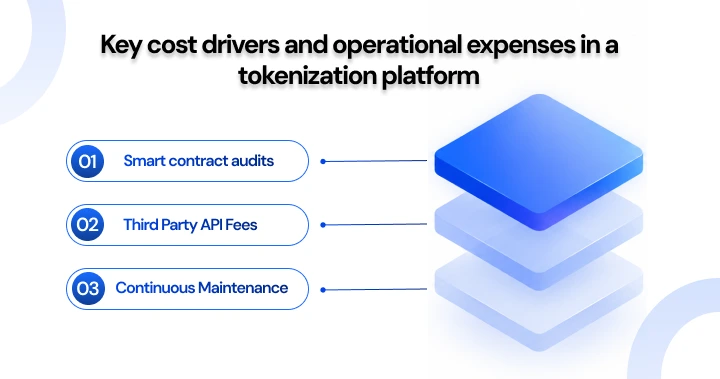
- Smart contract audits: There comes the added cost as independent firms like OpenZeppelin or Certik charge around $5,000 to $15,000 per contract to lower the risk.
- Third Party API Fees: There are also some recurring costs that come from providers like Sumsub, Onfido, Fiat payment gateways and cloud hosting services adding to the final budget.
- Continuous Maintenance: There are regular protocol updates, security patches and compliance with new regulations that further add 10 to 20% of the original build budget every year.
Build your Tokenization Platform Today with NetSet
As a premier tokenization solution provider and leading blockchain development company in Dubai, we have delivered end-to-end RWA tokenization services customized to global enterprises and property developers.
You might want to build real estate tokenization architecture, perform smart contract audits or build a white label tokenization platform with MVP development solutions, NetSet Software have got you covered.
Partner with a trusted asset tokenization company to build a secure, compliant, and scalable digital asset ecosystem designed for long-term commercial success. Contact our technical team to get started.
FAQs
What a real estate tokenization platform really is in simple words?
It is a platform built on blockchain that converts physical property titles or even equity interests into digital tokens so that audiences can buy it in fractions and streamline a trading ecosystem.
When it comes to smart tokens, which standard is the best for them?
There are multiple ideal standards like ERC-3643 or ERC-1400 that you will see in application more often because they bring built-in compliance registries, automated whitelist enforcement, and transfer restriction mechanisms.
How long does it take to create a tokenization platform?
To launch a white-label platform, it normally takes around a month where basic MVP builds require a couple of weeks, and fully custom enterprise platforms take half a year or may be more if it is too complex.
In what way do tokenization platforms meet the needs of regulatory compliance?
Good platforms enforce compliance programmatically where they connect KYC/AML verification services or apply transfer restriction logic just within smart contracts to block non-verified wallets.
What is the average cost to build a tokenization platform?
There is no fixed number you can commit because the development cost varies from location to location, experience of developers, development choice.