The days of traditional shopping stores are slowly going away and futuristic agents are taking the commerce era.
Nearly every business is planning or already working on the shift to an autonomous ecosystem from a reactive industry where the anticipation is all about predictive algorithms.
The shift is basically to stay ahead with the help of AI software development services providers to create easy but more modern shopping experiences.
Why is AI getting so popular in the retail sector?
If there is one fast growing area in the world, that would no doubt be Retail where shoppers already expect much more than just a product on a shelf.
To keep up, stores are moving away from old gut-feeling ways of doing things to make smarter choices on the basis of the real information.
In place of just hoping a product sells, AI helps leaders see patterns and predict exactly what customers might want to buy next. For example, in the AI in the fashion retail industry, clothing brands now use AI-powered recommendations to find the perfect outfits for shoppers on the basis of their unique tastes and how they react to different looks.
The future is different
Using these smart systems is no longer just an extra choice, as it has become a must-have to stay in business. Stores are under constant pressure to do more with less and AI helps them finish boring tasks and make decisions faster.
As per the NVIDIA’s second annual State of AI in Retail and CPG survey, 9 out of 10 retailers are now actively adopting AI to deliver the best possible experience to their customers.
In fact, a lot of them are already seeing the rewards, as 55% of retailers quoted that they are having a positive return on their money with AI in terms of productivity as well as cost savings. Like that, other similar experts believe that AI alone could add billions of dollars in value to the global retail world.
No doubt that the brands that will start now will find it much easier to lead the competition and keep customers coming back, while those that wait risk falling far behind their high-tech competitors.
The technology features that are popular with AI retail
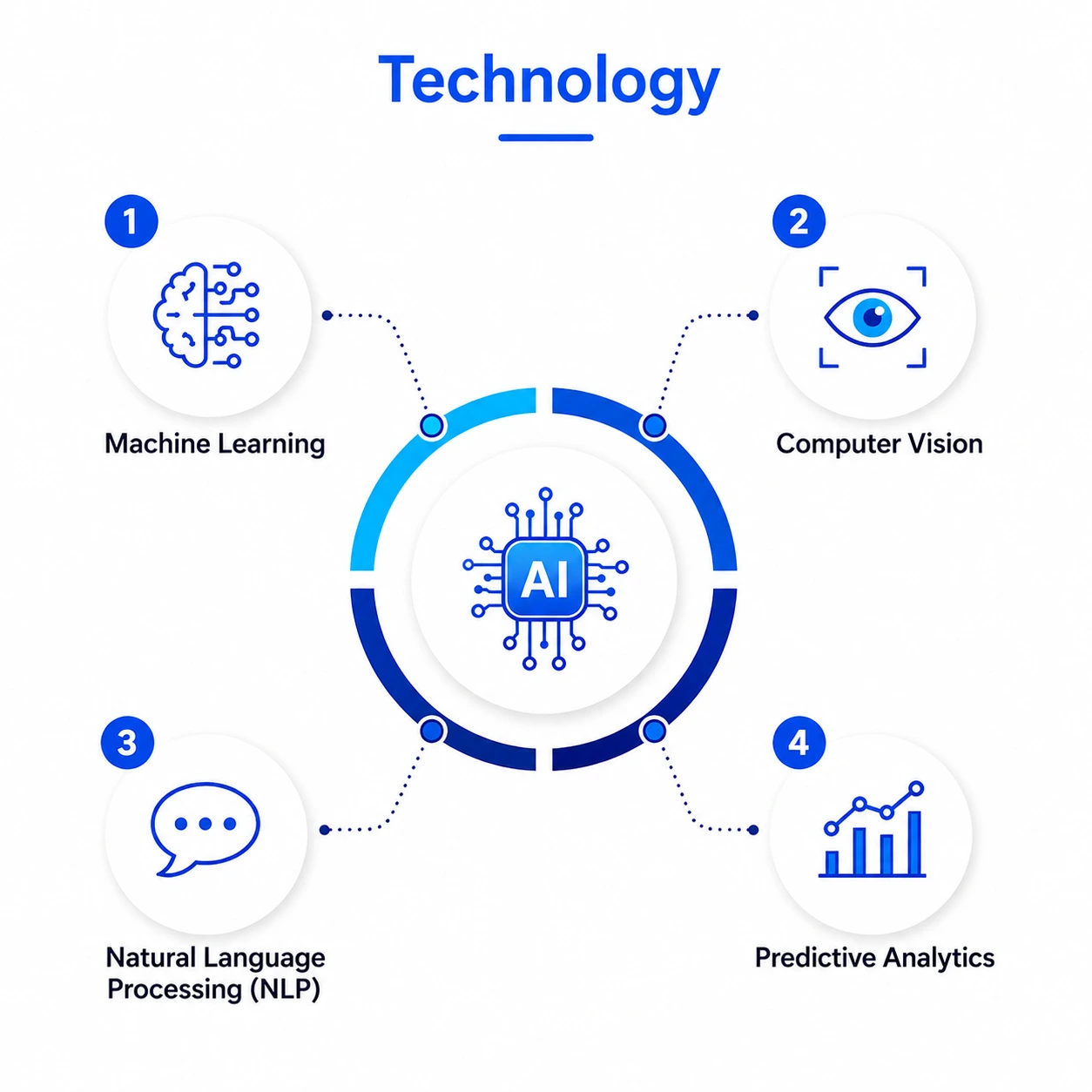
To understand how these changes happen, we need to look at the tools doing the hard work. These are not just basic computer programs but are smart systems that actually learn and grow over time.
When a store uses AI solutions in retail, they make all of their day-to-day activities much easier to manage. These tools can see, hear, and even guess what will happen next, thus helping store owners stay ahead in the competition.
You can think of it like a digital brain that never sleeps but for a deeper understanding, we would like to present the main gears that make this magic possible.
The retail AI toolkit
| Technology | What it Does | Retail Example |
| Machine Learning | Learns from patterns in data to make choices better | Knowing in advance that which fashion trends will be popular next summer as per the data collected |
| Computer Vision | Uses cameras to “see” and understand images | As soon as the shelf goes empty, the system actively alerts the worker to restock it |
| Natural Language Processing or NLP | Allows machines to talk back using human words | Using a virtual assistant to help a shopper find their shoe size |
| Predictive Analytics | Uses past info to guess what happens next | Knowing exactly how much stock to order to avoid waste |
These different parts of AI work in sync just like a well-oiled machine like when a chatbot is helping a customer online, another system is checking the warehouse to make sure that there are items ready to ship. When you use these tools, retailers can stop worrying about boring manual tasks and focus on making their customers feel valued.
The game-changing benefits for brands using AI solutions in retail
The management of a store can feel like a juggling act where you have to track stock, help shoppers, and guess what might sell next week. One big benefit of AI in retail is that it brings order to this busy world. In place of just guessing, store owners get clear answers that help the business grow while keeping the costs under control.
To get a little deeper, here are some most exciting ways AI helps brands succeed.
- Happier Teams: AI handles all those boring tasks and simple questions so that employees perform tasks for customers that require personal touch.
- Less Waste: When brands can predict exactly what they need to order, they can control the waste of unsold goods or running out of popular items during peak sale times.
- Physical cum digital Hubs: Stores are actually changing into the blend of physical and digital hubs, which means they are using digital data to make the physical store layout better for everyone who walks in.
- Understanding Requirement: Some systems can even sense customer sentiment.
When a brand uses these tools, it does more than just save money. They build a real bond with their shoppers. Every visit becomes a change to learn and improve that makes the store a place that people truly enjoy visiting.
The real-world retail stories of AI in action
It is one thing to talk about technology but seeing it in the real world is where the true excitement begins. Many of the world’s biggest brands are already using AI retail software to solve everyday problems and make shopping more fun. Let us look at how some of these famous names are leading the way.
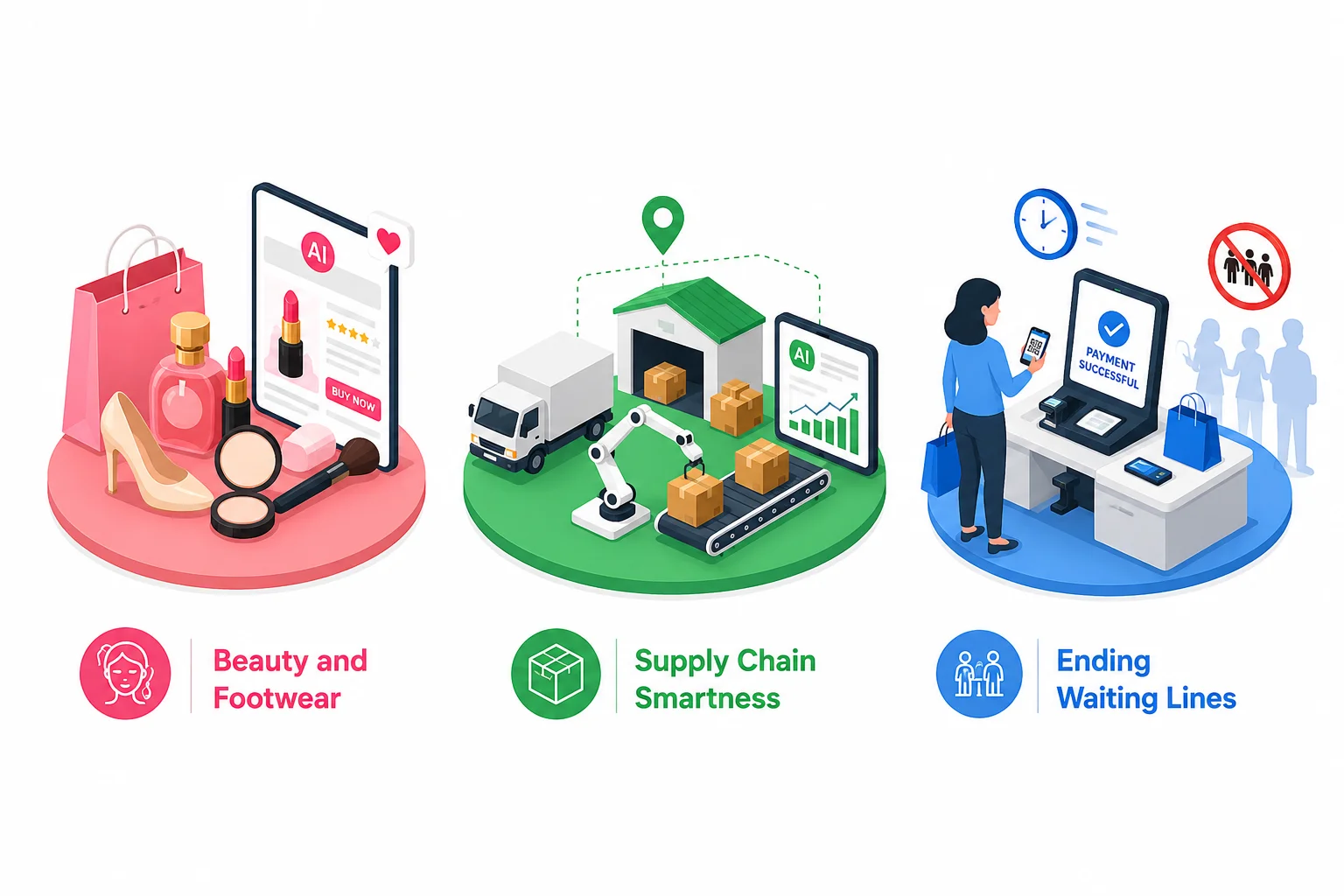
Beauty and Footwear
It was never easy for customers to find the right product for them, but AI is transforming as a great assistant to help them in their purchase. For example, the beauty brand Sephora allows customers to try on different makeup shades without actually wearing them as all customers have to do is point their camera towards their face with makeup shade.
Just like it, Nike helps shoppers to find their perfect shoe size where customers just have to point the app towards their feet and never worry about a bad fit again. Even Decathlon has used smart assistants to handle over 1000 customer questions at once, which makes support much faster for everyone.
Supply chain smartness
In the backend, AI not only acts as an assistant but also acts like a super fast manager to solve the supply chain issues with the speed that a human potential might never achieve. Zara uses such systems to track its clothing in real time so that the right styles are always in the right stores.
Then we have Walmart who use machine learning to predict which products will be popular and help them avoid running out of the items that customers love. This means no more empty shelves when you go to the store for something specific.
Ending Waiting Lines
Now one of the most famous examples with no more waiting lines has to be Amazon Go, which has built stores where customers can just walk out and keep on adding their inventory. It uses smart cameras and sensors with which the store knows exactly what customer has picked up and charges the account automatically.
Explore Our Case Study: Winelouvre: Premium French Wine Store Built on Shopify
The challenges in implementing AI solutions in retail
While the benefits hold exceptional value, it is never easy to set up the most advanced system into a retail business. A few of the important challenges that retailers face, when they start implementing AI into their retail ecosystem, are mentioned below.
- Organized Information and Old Systems: To work well, AI needs clean and structured data but a lot of stores have information that is trapped in different silos where most of the old systems are not compatible enough to share data with modern tools.
- Expensive starting and training costs: When a startup buys new equipment and has to train a team, it is a little expensive for them but most of the time it is worth it as they start seeing a fast return on investment for their money.
- Keeping things fair and private: Using AI to make big decisions or talk to shoppers brings up concerns about privacy and fairness. Stores must follow strict rules to keep customer data safe and secure at all times.
Working with these parts is why businesses partner with a custom AI development company who makes sure that the new technology fits perfectly into their existing business without causing any notable disruptions.
What’s next? Build the future of retail with NetSet Software.
As the retail world is moving fast, so is the team of NetSet Software because we are on a continuous quest to master advanced technologies and deliver modern tech to our customers. Our team can help you turn these complex retail technologies into easy-to-use experiences that grow your business in the backend.
We provide the complete suite of AI app development service in India, helping your business from start to end. It’s time that you also step into the smart era of shopping and transform your retail business with the power of AI.
FAQs
Will AI take the roles of employees who are working in the retail sector?
No, and a lot of experts quoted that AI is there to make human work better in place of replacing them. It mostly takes care of routine chores so that teams can be more productive and deliver a higher level of service.
How does AI help reduce shoplifting and loss?
AI uses computer vision to monitor store cameras in real time. It means it can spot suspicious behavior or notice when items are missing from shelves, thus helping to stop shrink and fraud before they cause big losses for the business.
Is it expensive for a small store to use AI?
The cost depends on the size of the project, where large enterprise systems can be a big investment, but many solutions are scalable and can be started as small pilot programs. Small retailers mostly begin with a single helpful tool like a smart chatbot to see a fast return on their money before growing further.
How does AI keep my customers’ data safe?
Retailers use strict security policies and AI governance to protect information. This consists of using tools to verify that customer images and reviews are real and setting up strong digital shields.
What does the term “agentic commerce” really mean?
Agentic commerce is the future of retail, where personal AI assistants act directly for the shopper. These assistants can find the best products, negotiate prices, and even handle the buying process across different stores. It moves retail from a world where you search for things to a world where your needs are met automatically.