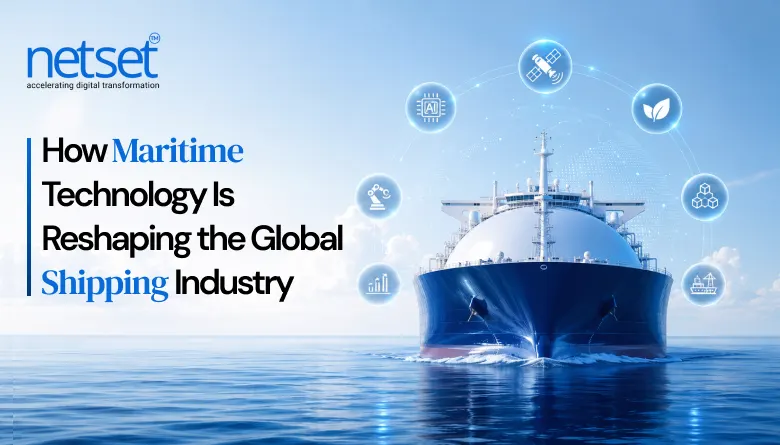
Ships moved 12.7 billion tons of goods across the world in 2024 alone. That volume runs on an industry slow to change but the shift now underway is evident. Artificial intelligence, connected sensors, and smarter ports are reshaping how fleets operate, both at sea and onshore. This guide breaks down the technologies driving that change, the numbers behind them, and the role an ERP Software Development Company plays in tying it all into one working system.
What Maritime Technology Actually Means
Maritime technology covers the systems that run a modern shipping operation, at sea and on shore. Some of it is hardware. Think sensors, navigation systems, and the satellite links that keep a vessel connected mid-ocean. Much of it is software, the tools that handle fleet management, maintenance, compliance, and the flow of cargo data.
The list keeps growing:
- Crews lean on autonomous navigation to guide vessels with less manual input.
- Artificial intelligence now handles two heavy jobs at once: predicting maintenance and planning routes.
- Then there is the green push that cuts ship waste using alternative fuels and scrubbers.
- IoT sensors are now streaming live readings from engines and fuel tanks in the ship vessels.
Why the Industry Is Moving Now
Several pressures have landed at the same time, and together they explain the urgency.
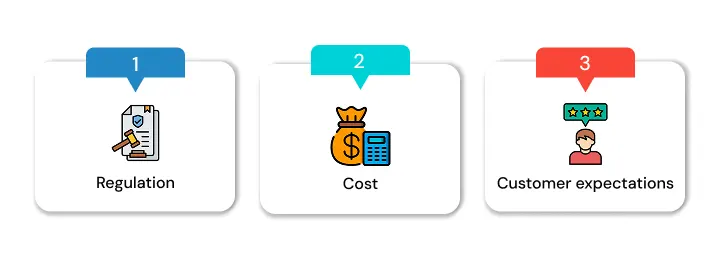
- Regulation: The IMO’s Carbon Intensity Indicator and the Energy Efficiency Existing Ship Index require operators to measure their emissions and then bring them down — not as a goal, as a rating each ship carries. For anyone calling at European ports, FuelEU Maritime piles on another set of obligations.
- Cost: Fuel can run past half of a voyage’s operating budget. So even a small efficiency gain reaches the bottom line fast.
- Customer expectations: A shipper wants to watch cargo move in real time and trust the arrival estimate, the same way anyone tracks a parcel to their front door. You don’t deliver that with phone calls and a spreadsheet. It takes systems that actually talk to each other.
These forces push in one direction. Operators need technology that works together, not in pieces.
The Technologies Doing the Real Work
A study by experts found out that there were 11,506 problems at sea because of machine damage or failure between 2014 and 2023. This is four times the number of times ships crashed into each other. In 2023 more than half of all problems were caused by technical equipment failures.
Predictive Maintenance
There are sensors that check how much engines and pumps are vibrating, how hot they are and how pressure they are under. Computer models that can learn from data look at this information. Find out if something is going to break before it actually does. The crew can then fix the part at the right time.
They do not have to wait for a date to fix the ship or for something to break while they are at sea. Lloyds Register thinks that this new way of doing things will become popular quickly and they believe that 70% of new ships will have maintenance platforms that use Artificial Intelligence by 2030.
Route and Fuel Optimization
Artificial Intelligence checks the weather, the state of the sea and traffic to find the route that saves money, not the shortest route. A study of 267 ships that used the Orca AI platform found that each ship saved one hundred thousand dollars on fuel every year which’s about three to five percent.
Fuel is usually, than half of the cost of a voyage so saving this much money can really add up for a whole fleet of ships that use Artificial Intelligence.
Digital Twins
A digital twin is a live virtual copy of a vessel, fed by real data from the ship. Operators test changes, predict performance, and trace faults from shore. The method saves travel, time, and guesswork.
IoT and Live Telemetry
The sensors behind all of this are now cheap and rugged. A single modern vessel produces a steady stream of operating data each day. Collecting it is easy. Using it well is the real test.
Blockchain for Documents
Bills of lading, customs records, and certificates once moved on paper, slowly and open to dispute. Distributed ledgers make these records tamper-proof and easy to share among parties with trust issues. Paperwork delays at the port drop.
Smart Ports
Terminals run on the same logic ashore. Sensor networks and predictive analytics coordinate berthing, cranes, and customs, so a ship waits less and earns more. A faster turnaround is added capacity at no extra cost.
Why Disconnected Tools Fall Short
Most coverage of maritime technology stops at the list above. The harder problem starts there. Each tool works on its own. Bought one at a time, they tend to arrive as separate islands.
The maintenance platform does not communicate with the procurement system. Fuel data sits apart from the finance ledger. Compliance reports get pieced together by hand from half a dozen sources, late on a Friday. This is the silo problem, and it quietly caps the return on every single purchase.
A predictive model only helps if it can reach the spare-parts and budget systems that act on it. Route data that never touches commercial planning leaves money on the table. Trapped data stalls at the edge of each tool. The technology works. The operation around it does not.
So the real question shifts. The point is not which tool to buy. The point is how to connect them into one system that shares its data and learns from it.
Why ERP Forms the Operational Core
A well-built ERP system brings the fleet operations, maintenance, crew records, procurement, compliance and finance into one connected data model.
Building that layer on purpose beats stitching together whatever vendors happen to sell. Shipping does not run like retail or factory work. Generic platforms force awkward workarounds. A custom ERP system development effort, shaped around how fleets actually operate, removes those workarounds. The software bends to the business, not the reverse.
AI turns that backbone into more than a filing cabinet. Once data from the ship, the port, and the office sits in one place, AI development services can read across all of it:
- Predictive analytics that forecast maintenance needs and cost
- Fuel models that surface waste across the whole fleet
- Automated reports that assemble CII and EEXI figures without the Friday scramble
A custom software development company wires these models straight into the systems that act on them, so an insight triggers the next step instead of sitting on a dashboard.
Operators weighing partners often hand the integration work to a specialist ERP software development company, or to an AI development company in California, where many maritime and logistics tech firms cluster. Location counts for less than discipline. What matters is whether the AI development services are built to connect, not to stand alone.
What the Numbers Say
The business case rests on figures that are now hard to wave away.
- Maintenance: Machinery failure causes more incidents at sea than any other factor. One peer-reviewed study tied over half of all 2023 maritime incidents to technical equipment failure. Lloyd’s Register says 70% of new ships delivered by 2030 will run AI-based maintenance platforms.
- Fuel: A study based on 267 AI-guided navigated vessels logged savings near $100,000 per ship a year, roughly 3 to 5%. Fuel often runs past half of voyage cost, so there are only small gains that multiply across a fleet.
- Trade scale: Ships carry around 90% of world trade. Small percentage gains on that base turn into real money.
The Hurdles Worth Planning For
Adoption carries friction, and the obstacles deserve a clear look.
- Cost and older fleets: Fitting aging vessels with sensors and modern systems takes serious capital. A full replacement is seldom the right move. If we phase the rollouts, starting with the highest-value data and expanding from there, it will spread the cost and prove the return before the next stage gets funded.
- Cybersecurity: A connected fleet is a larger target, and the danger is genuine. Security cannot be added at the end. It belongs in the architecture from the first line of code, which is one more reason the choice of development partner carries weight.
- Workforce readiness: New systems call for new skills, at sea and ashore. The operators who succeed treat training as part of the rollout, not a task for later. Software designed around the actual end user shortens the learning curve.
Build the System That Ties Your Fleet Together With NetSet
NetSet Software builds custom ERP systems shaped around how your operation actually runs, holding maintenance, procurement, crew, compliance, and finance on one connected platform. AI runs through it, so predictive analytics, fuel models, and automated compliance reports draw from the same data foundation.
Get a build matched to your fleet, not a template:
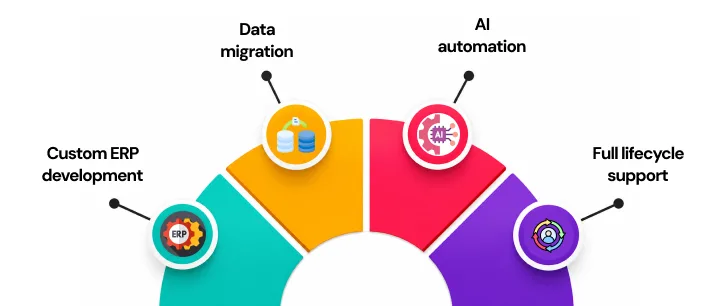
- Custom ERP development that automates core workflows across departments
- Data migration from legacy systems, with integrity kept and downtime avoided
- AI automation layered onto your data, from predictive analytics to compliance reporting
- Full lifecycle support, from configuration and implementation through testing and security
As an AI development company in San Francisco, California office, NetSet works close to the maritime and logistics sector driving this change. Contact us Today!
FAQs
How long does it take to build a custom maritime ERP system?
Timelines depend on scope. A single module can ship in a few months. A full fleet platform with AI and data migration often runs nine to eighteen months.
Can a new ERP connect with the systems already running on our vessels?
Yes. A well-built ERP links to existing navigation, sensor, and maintenance tools through APIs. Onboard data flows into one platform. The hardware that still works stays in place.
What data do AI maintenance and fuel models need to deliver results?
They draw on sensor readings, engine logs, voyage history, weather, and fuel records. Longer, cleaner data produces sharper forecasts. Early data collection pays off later.
How do we keep a connected fleet secure from cyberattacks?
Security belongs in the architecture from day one. It rests on encrypted storage, access controls, network segmentation, and steady monitoring. Added after a breach, it costs far more.
Should we retrofit older ships or wait for new alternative-fuel builds?
Most operators do both. Retrofitting sensors and software onto current vessels delivers returns now. Newbuild fuel choices follow regulation and supply timelines that reach toward 2030.