Why Prediction Markets Are Becoming The Next Big Thing In Decentralized Information Exchange
NetSet Software: Smarter Predictions, Seamless Launch.

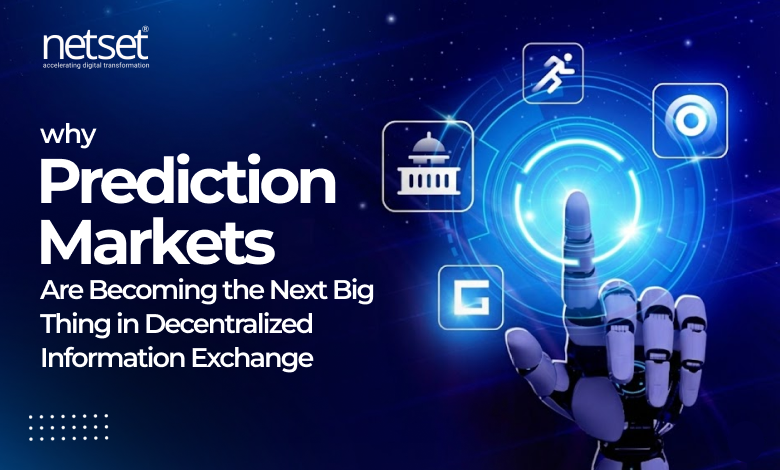
Prediction markets are becoming the next big platforms in decentralized information exchange because they turn collective knowledge into clear, reliable signals without depending on opinions, media coverage, or central control.
As trust in traditional sources drops, companies are exploring both centralized prediction market models and decentralized systems to get honest signals.
With the rise of prediction market software development, these platforms are becoming easier to build, easier to use, and far more reliable.
That is why prediction markets are slowly turning into the next generation of information exchange.
What Is a Prediction Market?
A prediction market platform is a digital space where people buy and sell outcomes of future events.
Modern prediction platforms are built using easy-to-change architectures, including white label prediction market software, which gives freedom to different businesses to launch quickly without starting from scratch.
A prediction market is a platform where people predict future events by buying and selling the outcomes.
These events can be about finance, politics, weather, sports or even future business decisions.
For example, a market might ask: “Will Company A launch a new product this year?” If you think yes, you buy shares of “yes.” If you think no, you buy “no.”
The price of each option moves based on demand. If the majority of people believe the event will happen, the prices go up quickly.
Over time, it is a clear signal that what the crowd believes is most likely going to happen in the future.
Over time, this price becomes a clear signal of what the crowd believes is most likely.
This makes prediction markets simple to understand and easy to use, even for beginners.
Why Traditional Information Systems Are Failing?
Most information today comes from centralized sources. This includes news websites, social media platforms, and research firms. These systems have problems:
- Information can be biased
- Algorithms decide what you see
- The majority get more attention
- Opinions spread faster than facts
In a centralized prediction market, decisions and controls often sit with one authority. This can limit transparency and trust.
Prediction markets offer a different approach. Instead of trusting one source, they trust the combined judgment of many people.
[Prefer Reading: How Much Does It Cost to Develop an AI-Driven Prediction Market Platform?]
Prediction Markets as Information Exchanges
A stock exchange helps people agree on the value of a company. In the same way, a prediction market platform helps people agree on the likelihood of an event.
This is why prediction markets are often called information exchanges. They collect ideas, beliefs, and data from many people and turn them into one clear signal.
Unlike comment sections or polls, prediction markets reward people for being right. If you are wrong, then you also get an average amount. If you are right, you gain. This simple rule encourages honest thinking.
The Rise of Decentralized Prediction Markets
The Decentralized prediction markets are not controlled by a single party or a business. In decentralized prediction markets, there are only smart contracts that manage both the trades and payouts.
This model offers many benefits:
- No central authority controls outcomes
- Open and transparent rules
- Global access
- Less chances of manipulation
Because of this, many startups are now focusing on prediction market software development to build trustless and open platforms.
Centralized vs Decentralized Prediction Markets
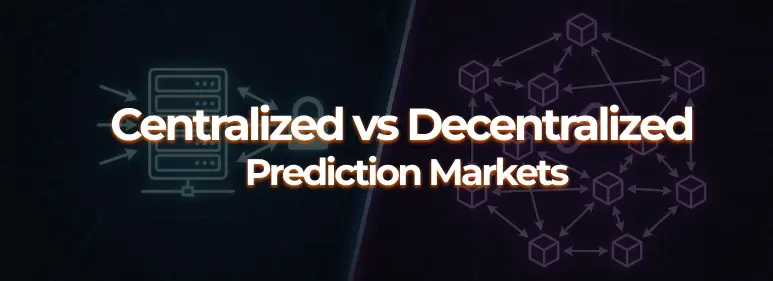
These two prediction market models are prominent and have their own place, and both work differently
| Centralized Prediction Market Platforms | Decentralized Prediction Markets |
| Easier to manage | More transparent |
| Faster updates | No single point of failure |
| Controlled by one organization | Community-driven |
Businesses select one of the model based on their goals, audience and risk tolerance.
How Prediction Markets Create Better Decisions?
Prediction markets help answer questions like:
- Will a project succeed?
- Will a policy work?
- Will demand increase?
Instead of long meetings or guesswork, companies can launch a market and let employees or users trade on outcomes.
The final market price is more accurate than expert opinions. This is why many organizations are investing in white label prediction market software to run private markets.
Use Cases of Prediction Markets
Prediction markets are already being used in many areas:
1. Business Planning
Companies use internal markets to forecast sales, deadlines, and product success.
2. Politics and Public Opinion
People trade on election outcomes, policy decisions, and global events.
3. Sports and Entertainment
Fans predict match results, award winners, and show outcomes.
4. Finance and Crypto
Markets forecast price movements, interest rates, and adoption trends.
Each use case shows how prediction markets turn shared knowledge into clear signals.
Why Businesses Are Building Their Own Platforms
Many companies do not want to depend on third-party tools. They want ownership, branding, and control.
This is where white label prediction market software becomes useful.
It lets businesses launch faster while keeping full control over rules, data, and user experience.
Many companies do not want to rely on public platforms. They prefer control over data, branding, and rules.
This is why prediction market software solutions are in high demand. With custom platforms, businesses can:
- Set their own market rules
- Choose centralized or decentralized models
- Integrate with existing systems
- Maintain brand identity
Some also combine prediction markets with decentralized exchange development to allow token trading, liquidity management, and smoother value exchange across markets.
Trust, Transparency, and Fairness
Trust is the biggest reason prediction markets are growing. People trust systems where rules are clear, and outcomes are fair.
In decentralized platforms, smart contracts handle payout automatically. No one can change the results after the event ends.
This kind of transparency helps platforms gain long-term followers with their own credibility.
The Role of Technology
Modern prediction markets use:
- Blockchain for transparency
- Smart contracts for automation
- Secure wallets for transactions
- Scalable infrastructure
Prediction market software development focuses on making platforms fast, secure, and easy to use for everyone.
Challenges That Still Exist
Prediction markets are powerful platforms, but they also face some challenges, and these are:
- Legal and regulatory limits
- User education
- Liquidity in small markets
- Event resolution accuracy
Strong platform design and clear rules help solve most of these issues over time.
The Future of Information Exchange
As people lose trust in traditional information sources, prediction markets guide offer a better option. They do not ask users to believe unquestioningly. They ask users to participate.
Over time, prediction markets become as common as search engines or social feeds. They help us answer questions not by arguing, but by testing beliefs.
With the rise of advanced prediction market platforms, the future of information exchange looks more open, honest, and useful.
Conclusion
Today, the problem is not that we don’t have enough information. The problem is that it’s hard to know what to trust.
Prediction markets fix this by showing what people truly believe, helping businesses and users make clearer decisions without confusion or influence.
As these platforms grow, they are becoming a reliable way to exchange information, forecast outcomes, and reduce guesswork.
With the right technology and structure, prediction markets can be simple, fair, and powerful.
NetSet Software Solutions supports businesses in building practical and trustworthy prediction market platforms, from white label prediction market software to full prediction market software development.
This is why prediction markets are steadily becoming the next big thing in decentralized information exchange.
FAQS
1. Are prediction markets legal for businesses to operate?
The legality of prediction markets will depend on location and the design of platforms. Managed markets such as Kalshi are regulated under the supervision of CFTC, whereas decentralized prediction markets would be based on a flexible architecture to fit changing regulations.
2. What is the difference between a prediction market and traditional betting platforms?
A prediction market is not about gambling but about the discovery of information. Prices are probability functions based on crowd intelligence, whereas betting exchanges are fixed-odds betting functions.
3. How much does it cost to build a prediction market platform?
Different software to develop a prediction market will have varying costs depending on the architecture, features, and compliance requirements. The white-label prediction market software saves a lot of money because it comes with ready infrastructure that enables a business to be started sooner without spending time developing it in-house.
4. Why are enterprises adopting decentralized prediction markets?
Companies use decentralized prediction markets as a form of transparency, settlement that is tamper-resistant, and real-time prediction. Oracle systems and smart contracts eliminate centralized bias, which makes them useful in the internal decision-making process, risk evaluation, and market intelligence.
5. What should businesses look for in a prediction market software provider?
Some of the areas that businesses should seek talent in include prediction market platforms, decentralized exchange development, oracle integration, and regulatory-conscious architecture. Some providers, such as Netset Software Solutions, offer scalable software solutions based on prediction markets, which are outsourced and are secure and customizable to be used over a long period by the enterprise.