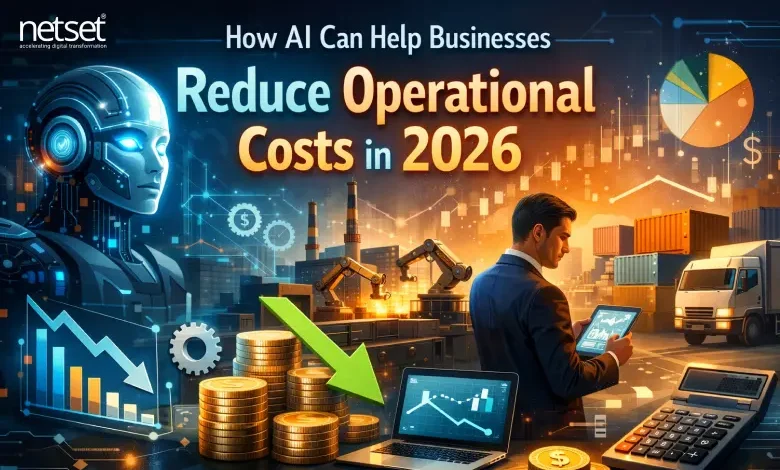
Do you know by 2026, over 54% of leaders will be adopting AI to cut costs, which makes AI a mainstream strategy instead of an experimental investment? Believe it or not, AI is all set to become the main pillar of cost reduction strategies as we jump into the next year.
As businesses face rising operational expenses, partnering with, let’s say, an AI development company in San Francisco or a custom AI development company will surely deliver a clear path to efficiency. When businesses have automation, predictive analytics, and smarter resource allocation, they can much more easily stream their workflows and achieve measurable savings.
Well, if you have already started to feel confused, then just keep up with the blog; we are going to expand everything related to the topic.
Why Do Operational Costs Matter at All?
Operational costs are the lifeblood for business sustainability, and as we step into the next year, they will be under massive adoption more than ever. The reasons for that are simple, like the inflationary pressures, global supply chain volatility, and strict compliance requirements, which ultimately drive companies to rethink about their efficiency.
For organizations in competitive hubs like San Francisco, it is the AI development services in San Francisco that will act as a pathway to reduce waste and optimize resources.
To your knowledge, AI does not just trim expenses; it reshapes how budgets are allocated, staff are managed, and workflows are streamlined. With predictive analytics and automation, businesses get to solve challenges before they even take place, delivering strong resilience in uncertain markets.
And, in the adoption planning too, we are not far behind, as use of AI in at least one business function is constantly increasing.
Key Areas Where AI Cuts Costs for Businesses
The level of efficiency that operations achieve with AI is unmatchable and was never visible earlier and the next year’s impact will register much larger adoption across every industry. As per PwC’s 2026 predictions, enterprises that use AI for automation and predictive analytics will reduce operational costs.
Any businesses investing in AI development services can expect the benefits in the below areas:
Repetitive Tasks
What can be better than a tool ready to handle all your routine processes like HR screening, invoice processing, and customer support? AI can do it, which ultimately lowers the labor costs and reduces human error so that the teams can focus on strategic work.
Traditional Maintenance
With AI monitoring systems, it is easy to detect equipment issues before they are even escalate further and by preventing downtime, companies save millions each year in repair and lost productivity costs.
Manual Resource Allocation
Predictive analytics will optimize staffing, logistics, and inventory management so businesses can allocate resources where they deliver maximum value without any waste, thus having a better margin.
Compliance and governance issues
With the help of AI, it is possible to automate reporting and regulatory checks, which cuts the need for large compliance teams so that businesses remain compliant without any burdens.
A Few Case Examples for San Francisco Businesses
As per projections from McKinsey’s research, the companies who will successfully scale AI agents in sectors like logistics and retail are expected to see operational cost reductions of 20–30% as we step into the new year. It is a trend particularly visible in high-growth urban innovation hubs where automation and predictive analytics are being mixed into core workflows.
Diverse business ecosystem
San Francisco brings in a diverse business ecosystem, and from tech startups to retail chains and logistics providers, you will find everything which makes it a prime environment for AI-driven cost reduction.
When you partner with an AI development company in San Francisco, they help your company customize solutions that address all your unique operational challenges. Well, let’s get into a little briefer:
- Tech Startups: AI can automate customer onboarding, optimize product testing, and also optimize cloud infrastructure usage, which removes pressures and challenges with faster innovation cycles.
- Retail Chains: Predictive analytics help retailers manage inventory better, cutting storage costs and minimizing stockouts then AI personalization system boosts sales without increasing marketing spend.
- Logistics Providers: AI will make route optimization better and deliver predictive maintenance for fleets so that there is low fuel consumption and downtime. This translates into significant savings in a city where delivery demand is high.
Role of Custom AI Development Companies
Deloitte’s 2025 forecast notes that by next year, enterprises using customized AI solutions will have 5x faster revenue scaling with saved cost as compared to those using standardized tools, thus highlighting the value of bespoke development.
While off the shelf AI tools can deliver good savings, true transformation comes from custom solutions. A custom AI development company designs systems around a business’s unique workflows, industry regulations, and growth objectives. Next year is going to be strong with customizations, which will be the differentiator and companies that adapt AI to their specific needs will achieve deeper cost reductions than those relying on generic platforms.
Custom partners also ensure scalability so solutions do evolve with market changes and compliance demands. Not only this but they also deliver constant support, make changes to models as data shifts, and aligns AI strategies with more of your long term business goals.
Some Strategies for a Successful AI Implementation in Business
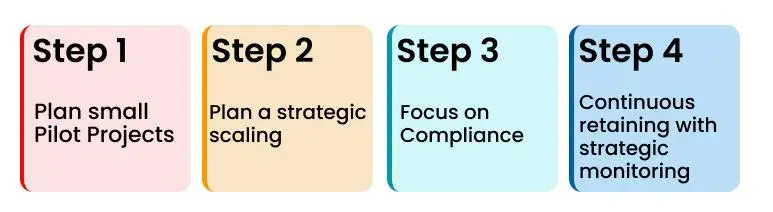 Now you know that AI will lower your operational costs but you might be confused about how a structured approach to it looks like? Like just imagine that you are a business in San Francisco, you have the right AI development services San Francisco but are confused about implementations so in that case just follow the below steps.
Step 1: Plan small Pilot Projects
Before you head to automate everything, start by the automation of a single workflow, such as invoice processing or customer support. With this you will be able to measure ROI much better before you make the final scaling decision.
Step 2: Plan a strategic scaling
As soon as pilot projects get successful, you may plan to expand AI into your other departments like logistics, HR, and compliance. With planned scaling you can take care of cost savings because the final implementation is backed by pilot batch data.
Step 3: Focus on Compliance
As the regulations go strict in the coming year, there is a strong need to focus on compliance, which must be built into every AI initiative. There are features like automated reporting and monitoring, which will help your business to reduce the cost of maintaining governance.
Step 4: Continuous retaining with strategic monitoring
AI models need regular updates to remain effective so it is important to partner with experts who will make sure that systems adapt to new data. As a result, there are notably a smaller number of inefficiencies, and cost savings are constantly maintained.
Some Challenges and Risks to Keep in Mind
While AI does deliver notable cost-saving opportunities, businesses must also consider the challenges that come attached to those gains.
The concerns of Data privacy
Data privacy remains a top concern because the regulations are tightening up and the chart will keep growing as we step into next year. The companies who plan to hire AI development services providers shall take care of compliance frameworks that must be there in every AI initiative so that they can avoid costly penalties later.
Investment, Biasness, and Integration Concerns
Upfront investment is another hurdle so developing and deploying AI systems requires capital, and businesses without a clear ROI roadmap risk overspending. Then bias in AI models also comes out as reputational and financial risks, as flawed predictions can lead to poor decision-making.
With that, integration challenges add complexity, as legacy systems may not seamlessly connect with modern AI platforms, thus resulting in connection failures instead of savings.
What to follow when you choose a tech partner?
Selecting the right partner for AI adoption is about more than technical expertise, as it is about proven impact.
Start with Portfolio, Case Studies, and Client Testimonials
Let’s say you are in the USA and searching for a reliable AI development company in San Francisco, then you shall carefully look at a strong portfolio of successful projects. With that you will be able to assess if they have relevant experience in solving operational costs through automation, predictive analytics, and compliance solutions. Then you must also look for case studies and client testimonials to further understand their adeptness to your unique industry needs.
[Explore Case Study: AI Health Assistant Case Study]
Transparency and innovation capabilities
Transparency is another key element to take care of and when the partner is right, they will always opt for clear communication, detailed implementation roadmaps, and upfront pricing. This lets you plan budgets confidently and without any sudden hidden costs.
Further, innovation is also a separator among the best products, so look for a partner who is passionate about solving challenges with advanced tech like generative AI, natural language processing, and computer vision.
Long-term support
Do not forget about long term support as it is a critical factor in terms of sustainability that AI projects demand due to their evolving retraining, monitoring, and compliance needs. The right tech partner will commit to such a collaboration where your infrastructure and algorithms scale as your business grows.
Transform your AI vision to reality with NetSet Software
If you are ready to cut costs and future-proof your business with AI, then you can partner with NetSet Software, an expert AI development services provider who understands your industry and delivers measurable savings.
We are recognized by global media houses when it comes to custom solutions that scale with your growth so that you stay competitive in 2026 and beyond. So why wait for next year? Start your AI journey today and unlock smarter efficiency.
[Prefer Reading: AI in Product Development: Key Benefits, Cost Factors & Implementation Strategies]
FAQs
Can AI really reduce operational costs for my business or is it just a gimmick?
It is not a gimmick when used right because AI does repetitive tasks, optimizes resource allocation, and automates compliance reporting, but you have to partner with AI development services provider to deliver measurable savings across departments.
Why should I choose a custom AI solution instead of off‑the‑shelf tools?
Generic tools deliver limited efficiency, so a custom AI development company builds solutions to your workflows, regulations, and growth goals for deeper cost reductions.
Is AI adoption expensive for small businesses?
Initial investment can be significant, but ROI is rapid so by 2026, scalable AI solutions will allow even small businesses to cut costs effectively.
What industries in San Francisco benefit most from AI cost reduction?
Although every industry gets benefits, retail, logistics, and tech startups are some of the early adopters who can partner with an AI development company in San Francisco and design some brilliant solutions to maximize their cost savings.
How do I ensure compliance when adopting AI?
Compliance is important in 2026 so a trusted partner connects governance frameworks into AI systems to deliver fewer risks and avoid costly penalties.