There are significant changes in operational workflow in the healthcare industry. Patients want to make appointments within a few seconds, check prescriptions online, and call doctors when necessary, remotely. To the healthcare providers, it is no longer a choice to meet these expectations. It has a direct impact on patient satisfaction, retention, and operational efficiency.
As a result, hospitals, clinics, telehealth companies, and other insurers are investing in applications like Patient Access that allow healthcare to be faster and more convenient. These platforms will also reduce the workload in the front desk, improve scheduling, and improve the flow of information among patients and providers.
A majority of the firms prefer to hire a mobile app developer in India to come up with these solutions at low costs and with highly qualified staff of engineers.
The digital health market globally is estimated at USD 288.5 billion in 2024 by Grand View Research, and the demand is still on the rise. The actual business question is apparent: What is the cost to develop a healthcare app such as Patient Access?
This guide breaks down healthcare app development costs using realistic delivery models, technical scope, compliance requirements, and deployment strategy.
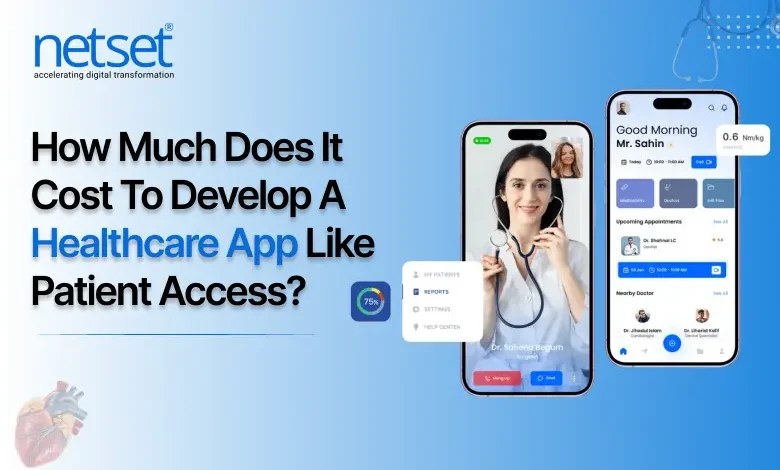
What Is a Healthcare App Like Patient Access?
A Patient Access-style application is a digital self-service layer between healthcare providers and patients. It reduces friction in common operational tasks and improves service availability.
Typical modules include:
- Appointment booking and rescheduling.
- Repeat prescription requests.
- Secure patient login.
- Access to selected medical records.
- Test result notifications.
- Teleconsultation or video appointments.
- Payments and invoices.
- Multi-clinic scheduling.
- Secure messaging.
- Reminder notifications.
From a technical standpoint, these apps are rarely standalone products. They usually connect with:
- Electronic Health Record systems (EHR).
- Practice management software.
- Pharmacy systems.
- Billing platforms.
- Insurance claim systems.
- Identity verification services.
- Analytics dashboards.
This is one of the reasons why healthcare applications have larger budgets than other consumer-centric applications.
How Much Does It Cost To Develop A Healthcare App Like Patient Access?
The total app development cost is determined by the above factors. An appropriate price structure would be as follows:
| Project Scope | Estimated Cost (USD) | Timeline |
| MVP with booking + login + reminders | $35,000 to $60,000 | 3 to 4 months |
| Mid-scale app with records + chat + payments | $60,000 to $140,000 | 5 to 7 months |
| Advanced platform with telehealth + integrations | $140,000 to $300,000+ | 8 to 12+ months |
A basic appointment-booking app may launch quickly. The multi-provider platform that is regulated and has secure access to records and real-time integrations demands a great deal of engineering effort.
To achieve cost-efficiency, numerous companies choose to hire a mobile app developer in India since engineering companies in India tend to offer better budget-to-output ratios as compared to other, more expensive markets.
Why Are Healthcare App Development Costs Higher Than Standard Apps?
Healthcare apps carry requirements that many retail or lifestyle apps do not.
1. Data Security Requirements
Patient data requires stricter controls, such as:
- Encryption in transit.
- Encryption at rest.
- Multi-factor authentication.
- Device session management.
- Audit logs.
- Permission controls.
- Data retention policies.
According to the IBM Data Breach Report, healthcare is always one of the most expensive sectors in cases of breach impact.
That makes security engineering a mandatory budget item, not an optional add-on.
2. Regulatory Readiness
Depending on market geography, the product may need alignment with:
- HIPAA (United States).
- GDPR (European Union).
- NHS data governance models (UK).
- Local health data regulations.
3. Integration Complexity
Connecting external systems adds backend effort, testing time, and dependency management. A healthcare app that must sync appointments, records, billing, and notifications can become integration-heavy very quickly.
Prefer Reading: A Complete Guide To Choosing The Right Healthcare App Development Company
Which Features Should Be Built First To Control Cost?
Many healthcare founders overspend by launching with an oversized version of one product. A stronger approach is phased delivery.
Recommended MVP Features
- User registration.
- Secure login.
- Patient profile
- Appointment booking
- Calendar reminders
- Push notifications
- Support request form
- Admin dashboard
- Analytics tracking
Phase Two Features
- Telemedicine video sessions
- Prescription workflows
- Health records access
- AI chat support
- Insurance verification
- Smart scheduling
- Wearable integrations
This model, when applied in phases, may lead to a 25% or greater cost reduction in developing healthcare apps during their first release.
Should You Use Native Apps or Cross-Platform Development Frameworks?
This decision directly changes the budget, speed, and maintenance cost.
| Approach | Best Use Case | Cost Impact |
| Native iOS + Android | High-performance products | Higher |
| Flutter | Fast dual-platform launch | Moderate |
| React Native | Shared codebase apps | Moderate |
| PWA | Validation-stage products | Lower |
Many growing healthcare brands now choose cross-platform development frameworks because they reduce duplicate development effort across iOS and Android.
Flutter is often selected for interface consistency and faster rollout cycles. That is the reason why certain companies exclusively intend to hire Flutter app developer teams in cases where the time-to-market is a factor to consider.
What Does a Typical Budget Breakdown Look Like?
For a $120,000 healthcare app project, budget allocation may look like this:
| Cost Category | Share |
| Product discovery | 8% |
| UI/UX design | 12% |
| Mobile frontend | 28% |
| Backend APIs | 22% |
| Integrations | 12% |
| QA + testing | 12% |
| DevOps + deployment | 6% |
This shows why affordable quotes often become misleading. If architecture, QA, or integration budgets are set too low, risk usually appears later in production.
How Much Can AI Features Add to the Budget?
Demand for healthcare automation is growing. A credible AI app development service may implement features such as:
- Symptom pre-screening chat flows
- Appointment routing logic
- Voice-to-text consultation notes
- No-show risk prediction
- FAQ automation
- Claims document extraction
Estimated additional cost:
| AI Scope | Added Cost |
| Basic chatbot workflows | $10,000 to $20,000 |
| NLP + workflow automation | $20,000 to $50,000 |
| Custom predictive models | $50,000+ |
AI must be associated with practical improvement in operations, like a decrease in the load on support, increased speed in scheduling, or increased booking rate.
What Are the Ongoing Costs After Launch?
Many buyers only budget for the build cost. That creates problems later.
Post-launch costs usually include:
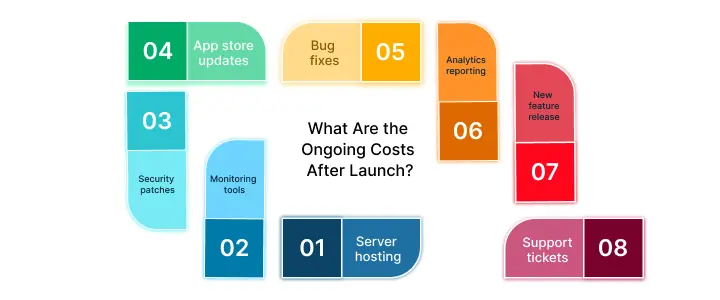
- Server hosting
- Monitoring tools
- Security patches
- App store updates
- Bug fixes
- Analytics reporting
- New feature releases
- Support tickets
Annual maintenance commonly ranges from 15% to 25% of the initial build cost.
How Can You Reduce Cost Without Lowering Quality?
Use a Discovery Sprint
A two-week planning sprint often saves months of rework. It should define:
- User flows
- Feature priorities
- Integration map
- Security scope
- Delivery milestones
Build in Releases
Launch the core patient workflow first. Expand later using real usage data.
Reuse Mature Services
Use proven APIs for:
- Video calls
- SMS reminders
- Authentication
- Payment gateways
Choose a Specialized Partner
An experienced mobile app development company often provides advanced healthcare delivery economics than generalist vendors.
What KPIs Should a Healthcare App Track After Launch?
Budget decisions should connect to measurable outcomes.
Track metrics such as:
- Appointment booking completion rate
- Active monthly users
- Prescription request turnaround time
- Patient retention rate
- Support ticket volume
- Crash-free session rate
- Average page response time
- No-show reduction percentage
A healthcare app that reduces no-show rates by even 10% can create measurable revenue gains for clinics operating high-volume schedules.
Why NetSet Software Solutions Is a Practical Delivery Partner?
Healthcare platforms need disciplined engineering, not generic app production.
NetSet Software Solutions supports mobile product execution with capabilities relevant to regulated healthcare systems:
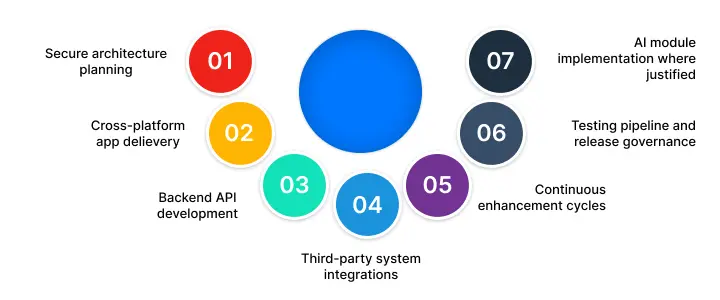
- Secure architecture planning
- Cross-platform app delivery
- Backend API development
- Third-party system integrations
- AI module implementation was justified
- Testing pipelines and release governance
- Continuous enhancement cycles
For organizations seeking Healthcare app development services, delivery ownership matters as much as coding capacity. Projects succeed when scope, risk, timelines, and performance targets are managed properly.
Prefer Reading: Doctor-patient Appointment Booking App Case Study
Conclusion
The development cost of a healthcare application, such as Patient Access, may be at a price of $35,000 to build a lean MVP, and at a cost of $300,000 and above to build an enterprise-level platform. The last budget would be based on compliance, feature count, degree of integration, mobile framework selection, and post-proposal provision planning.
The Advanced healthcare products are rarely built by chasing the lowest quote. They are built by defining the right first release, controlling technical debt, and aligning spend with measurable outcomes.
If you are budgeting now, start with user flows, required integrations, regulatory market, and release priorities. That will produce more accurate vendor estimates than any generic cost calculator.

FAQs
How long does it take to build a healthcare app like Patient Access?
Most MVP health care applications take three to four months. Mid-tier applications take five to seven months. Enterprise solutions, including telemedicine functionalities, take eight to twelve months or even more.
What is the average cost of a healthcare mobile app?
At Netset, basic health care apps start at around 35,000 dollars. The mid-tier range is from 60,000 dollars to 140,000 dollars. The more sophisticated systems, which also have compliance tools and third-party integration, might cost even over $300,000.
Are cross-platform development frameworks suitable for healthcare apps?
Yes, many healthcare businesses use Flutter or React Native successfully. They reduce duplicate code effort while maintaining a strong user experience when engineered with a secure backend architecture.
Why do companies hire mobile app developers in India?
The main reasons why many firms prefer India include great engineering skills, low cost, scalable delivery units, and experience in developing mobile platforms in healthcare, fintech, retail, and enterprise markets worldwide.
What is the annual maintenance cost after launch?
The maintenance budgets of most healthcare apps are annual and equal between fifteen and twenty-five percent of the cost of initial construction, and include updates, security patches, hosting, fixes, and improvements.