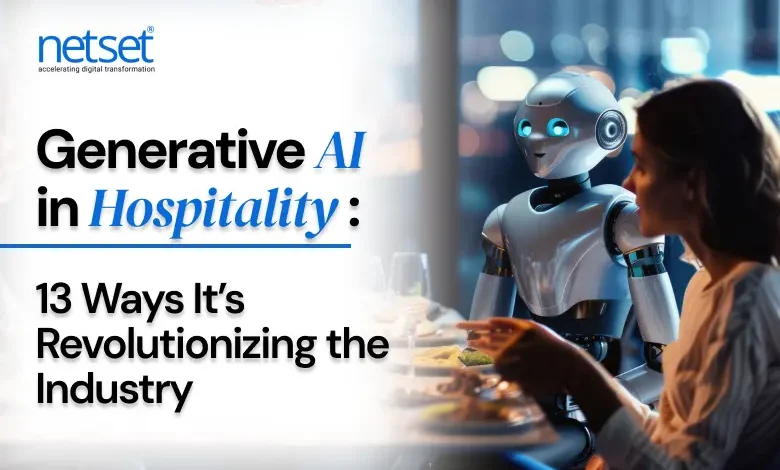
In the hospitality industry, the guest expectations are growing, competition is increasing, and brands are trying to find a smarter way to deliver custom experiences without much pressure on their teams. That is where Generative AI steps in, because it does not just automate tasks, it creates new possibilities for service, communication, and guest engagement.
With that, as hotels, resorts, and travel companies search about these possibilities, many have already turned to a trusted Generative AI Development Company to help them build solutions that actually fit real hospitality workflows. But there are a few businesses who face confusion and want a clear understanding if this technology will really bring them ROI or not.
What Makes Generative AI a Game Changer in market?
Generative AI brings innovation to hospitality that was never there and it does it by not just task automation, but by creating new ways for hotels to understand and serve their guests. And as the whole world moves toward faster, more custom experiences, this technology steps in with capabilities that traditional tools simply were not able to offer.
In place of relying only on predefined rules, Generative AI learns from patterns, adapts to guest behavior, and produces content, insights, and recommendations in real time. And, due to this flexibility, hotels can respond to guests more naturally, design better experiences, and make smarter decisions without slowing down operations.
When these capabilities are paired with a strong AI development services provider team, the results become even more powerful. The teams gain tools that help them predict demand, personalize communication, and create content instantly without heavy manual efforts.
Now as the technology gets better, it is quite clear that Generative AI is not just another upgrade instead , it is a shift in how hospitality brands think, plan, and deliver value, where that shift is already affecting how the next generation of hotels will operate.
13 Ways Generative AI Is Transforming Hospitality
The way that Generative AI reshapes hospitality is far more than just automation, and as hotels explore these elements, they are finding completely new ways to serve guests, optimize operations, and create memorable experiences.
And because the technology adapts to real time behavior, it keeps getting better the more it is used which is exactly why the industry is appreciating it so widely. To understand better, here are the 13 biggest shifts happening right now.
#1 Custom Guest Experiences at Scale
Guests expect experiences that feel personal to them, and Generative AI makes that possible without adding pressure on staff. It analyzes preferences, past stays, and behavior to create recommendations that feel thoughtful and human. And as guests interact more, the system keeps refining those suggestions.
#2 AI-Generated Travel Plans in Seconds
Planning a trip can take hours, but Generative AI makes it a few seconds work. It creates journey routes on the basis of guest interests, budgets, and travel style, with top-class adjustment flexibility anytime. This gives hotels a new way to add value before the guest even arrives.
#3 Smart Rooms That Adapt to Every Guest
Smart rooms are getting smarter when AI steps in due to lighting, temperature, entertainment, and room preferences that adjust itself just on the basis of the guest profiles. And because the system learns over time, each stay feels more custom than the last one.
#4 Instant Guest Support With AI Assistants
Guests want quick answers, and AI assistants deliver them without delays where these assistants handle everything from booking requests to room service queries, and they do it in natural, conversational language. Meanwhile, staff get more time to focus on high‑value interactions.
#5 Smarter Pricing With Real-Time Insights
Revenue teams rely on accurate pricing, and Generative AI helps them make better decisions. It studies demand, events, seasonality, and competitor trends to recommend optimal prices and because it updates in real time, hotels stay forward in competition without constant manual adjustments.
#6 Accurate Demand Forecasting for Hotels
Forecasting gets reliable when AI is able to process thousands of data points at once as it can predict occupancy, staffing requirements and inventory requirements with best accuracy so that hotels can plan ahead and lower operational waste.
#7 Marketing Content Creation with AI
Marketing teams face struggle with content volume, and this is where Generative AI becomes a game-changer as it creates emails, social posts, ad copy, and promotional ideas in seconds with brand tone in mind. And with support from generative ai consulting services, hotels can automate their complete content workflows.
#8 24/7 Chatbots That Actually Feel Human
Chatbots are not new but they felt robotic earlier but Generative AI has changed that completely. If you look now, the conversations feel natural, aware of context, and multilingual with which hotels can support guests around the clock without losing the human touch.
#9 AI Simulations for Staff Training
Training gets more immersive when AI gives real-world scenarios so that staff can practice handling complaints, upselling, or crisis situations in a safe environment. And because simulations can adapt to performance, training gets more personal and effective as per the individuals.
#10 Smart Menus with Optimization
Restaurants within hotels get benefits too because AI studies the cost of ingredients, what guests like, and seasonal trends to suggest menu changes that boost profitability then once connected with operational data, it also helps reduce food waste by big numbers.
#11 Fraud Prevention and Payment Security
Security gets stronger when AI monitors transactions in real time as it can detect unusual patterns, flag suspicious activity, and protect guests from fraud, all without slowing down the payment process at all.
#12 AI for Review Analysis and Reputation Management
Guest reviews are valuable and Generative AI lets hotels understand them fastest with features like summarisation of feedback, identification of recurring issues, and highlighting opportunities for improvement. This gives managers a clearest picture of guest sentiment without hours of manual reading.
#13 Hotel Design and Concept Creation with AI
Design teams can now explore new concepts faster than ever as Generative AI creates room layouts, décor ideas, and theme variations in minutes thus helping hotels visualize possibilities before investing in renovations or new builds.
Why do a range of Hotels Love Generative AI (Benefits)?
Generative AI is getting its momentum in hospitality because it solves problems that hotels have struggled with for years, and it does so without making things complex for daily operations. As teams start using these tools, they quickly be sure that the technology does not just improve one part of the business but makes the entire guest journey better.
Benefits keep on growing with usage
As the system learns from every interaction, the benefits keep growing over time which means that hotels start to understand guest behaviour more clearly, respond faster, and make decisions with confidence.
Great for managers and all team
At the same time, managers get better clarity into demand patterns, staffing needs, and pricing opportunities, which helps strongly in pre-planning instead of taking last-minute actions. Also, when marketing teams take help from AI-generated content, they produce campaigns faster so that the brand stays stronger across channels.
All of this results in more custom and better experience which is exactly why so many hotels adopt Generative AI as a long-term strategy in place of a short-term experiment.
Some Challenges Hotels Must Be Aware Of
Although Generative AI brings a lot of benefits to hospitality, it also brings in a few challenges that hotels shall understand before going for scaling their operations with it. Here, none of the challenges are deal breakers, but awareness can help teams plan better and avoid unnecessary costly mistakes.
Keep up with data privacy
One big concern is data privacy because hotels handle sensitive guest information every single day, and when AI systems process that data, strict security standards shall be there. And as these systems become more connected the responsibility to protect guest data becomes even more important as well as complex.
Integrations take time
There are many hotels who still rely on older systems that were not built with AI in mind, which is why the integration with those systems takes time. Your teams may need training to feel confident using new tools as well as help them build up a mindset for the shift across the organization.
Due to the above reasons, hotels that plan ahead with clear goals, strong data policies, and the right technical support find it much easier to adopt Generative AI without problems.
How to Start Your Generative AI Journey?
Getting started with Generative AI becomes much easier once hotels find out that they do not need to transform everything at once. And instead of jumping into large, complex projects, the smarter approach is to begin with small, high-impact use cases that show quick results. That way, teams can build confidence while the organization sees real value early on.
Most hotels begin by studying a few areas where AI can quickly reduce workload and these usually fall into clear, manageable categories such as:
- Guest communication, where AI assistants handle routine questions
- Content creation, where marketing teams automate repetitive writing
- Forecasting and pricing, where AI improves accuracy and speed
- Operational planning, where managers get clearer insights into demand
Once those early wins are in place, it becomes much easier to make expansion into more advanced capabilities like smart room customisation or predictive pricing. And because each step builds on the last, the transition feels smoother rather than complex.
A right technical partner makes a difference
At the same time, choosing the right technical partner makes a huge difference. Working with an experienced Generative AI Development Company promises you a correct strategy, data pipelines, and integrations right from the start. That foundation helps hotels remove costly mistakes later on.
When all of this comes together like clear goals, small pilots, and the right expertise, then hotels can adopt Generative AI confidently and start seeing meaningful results much sooner than expected.
Want a Generative AI Partner? Work with NetSet Software
When hotels begin their Generative AI journey, and that’s exactly where a right generative AI partner can make it a success.
At NetSet Software, we bring more than 20 years of experience in building enterprise-grade digital solutions. We have maintained a 100% customer satisfaction record, and that consistency comes from a simple approach, understanding real business challenges before recommending any solution.
If you are looking for reliable Generative AI Application Development expertise, partner with NetSet for a secure, reliable, and ready-to-grow solution for your hotel.
FAQs
How is Generative AI different from regular automation?
Generative AI goes more than rule based automation, and it creates content, insights, and recommendations on its own. Because of that, hotels get more flexibility and more natural guest interactions.
Is Generative AI safe for handling guest data?
It can be very safe when the right security practices are in place, and that’s why hotels usually work with experienced partners who understand data protection and compliance.
Do hotels need to replace existing systems to use AI?
Not necessarily because most hotels start by connecting AI tools to their current systems, and as the results grow, they upgrade only the parts that need improvement.
Can smaller hotels use Generative AI too?
They can and smaller teams see a fast impact because AI lowers manual work and helps them deliver custom service without increasing staff load.
What is the time frame to see real results of generative AI in my business?
Most hotels see improvements within weeks, and the impact grows as the system learns from real guests and operations.